
Let's Row Together
Lighthouses are "beacons in the darkest night," like my Cape Cod friend Felicia Penn who was a beacon in guiding her community with her steadfast values lighting the paths ahead.

This offer to climb a Nantucket lighthouse didn’t take long to sell out.
Had I known about June’s semi-annual stair-climbing outing, then on Saturday I could have been on the spiral staircase heading to the top of the 60-foot Sankaty Head Lighthouse on Nantucket’s Eastern shore.
To see where in 1850 its light shined its first warning glow.
It’s an adventure too good to miss. I’ll catch up next time.
Given that lighthouses are magnets for me.
Captivating me as few man-made structures do.
It’s likely that my love affair with lighthouses arises from sailing on Nantucket Sound.
Making me and certain lighthouses longtime friends.
As each encounter I have with a lighthouse creates a placeholder of memory.
Which resurfaces whenever our acquaintance is renewed.
To my everlasting delight since being around lighthouses sparks joy in me.
They’ve done this since I was a young girl racing a gaff-rigged, wooden sailboat, a Beetle Cat, on Nantucket Sound.
And my instructors handed me a chart showing me the bouys they’d use to set our race course. Some were identified by letters, others with numbers.
But what caught my attention was the demarcated triangular zone on the chart.
Bordered by thick lines, this was a forbidden area to sail. Even if we felt seduced to venture into it to gain tactical advantage.
If we were spotted doing this, we were disqualified.
For inside this zone were rocks and shallows we had to avoid.
Standing in watch of this forbidden zone was a stone lighthouse perched on a vegetated bluff at the southern tip of a privately owned island.
Leaving me to admire the Point Gammon Lighthouse from the sea.
By the time we were introduced, this old lighthouse was no longer shining its light. It was deactivated in 1858, just 42 years after being lit.
Not for an instant did this realization diminish my fixation on this lighthouse nor lessen my admiration for its elegant durability.
In our current time of disruptive changes on the Cape, the old Cape’s quaint villages — rhapsodized by Patti Page — are being whiplashed by the expansive desires of its summer wealthy elites and the economic and housing density issues of its year-round workers and retirees.
Point Gammon Lighthouse stays the course.
A gorgeous site which each summer I love to behold, as this lighthouse – holding decades of memories for me – stays anchored to its bluff.
A touchstone of predictability to older Cape Codders. Like me.
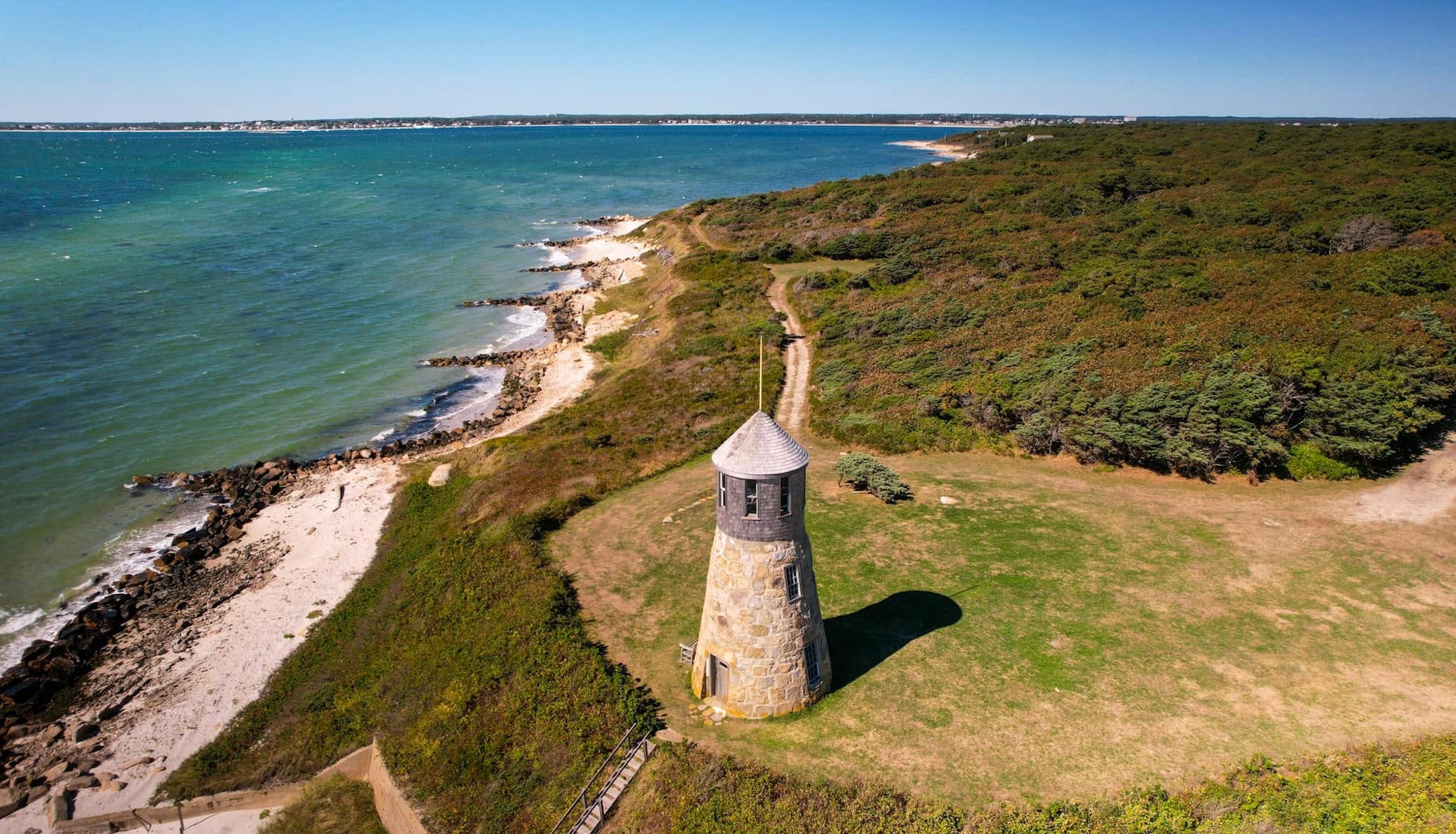
First lit in 1816 by seven lamps, Point Gammon Lighthouse emitted a fixed white light. It went dark in 1858.
Lighthouses draw me to them.
Beckoning me to climb to their glass top, if I can.
Like I do in Europe, winding my way up ancient stairways of cathedral domes and city towers.
Like I did on Martha’s Vineyard in 2024, when I climbed the Gay Head Lighthouse.
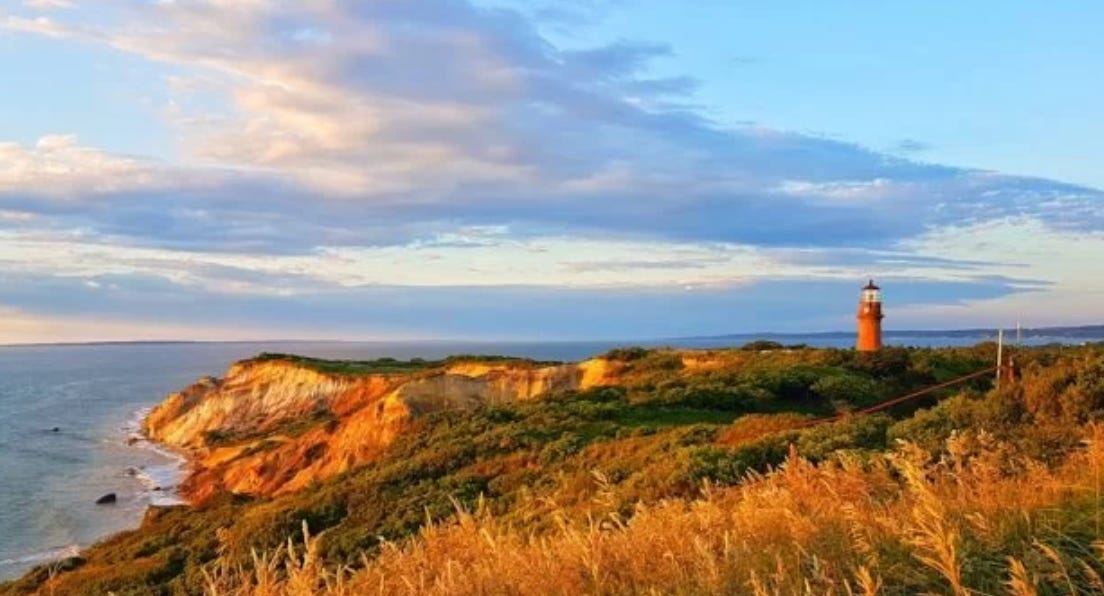
Secretary of the Treasury Alexander Hamilton was granted $570 by Congress to build Gay Head Lighthouse on the island’s clay cliffs in 1796. Its light of several wicks in a shallow circular pan filled with sperm whale oil was lit in 1799 to warn sailors of Devil’s Bridge, a nearby submerged shoal and rock formation. I sense a telescope was useful!
When I’m sailing and a lighthouse comes into view, I head for a closer look.
Though with my childhood sailing chart in mind, I don’t to sail too close knowing why they are there.
Even as I sail away, I’ll look back to steal glances of my friend.
Until the horizon drops her glass top from view.
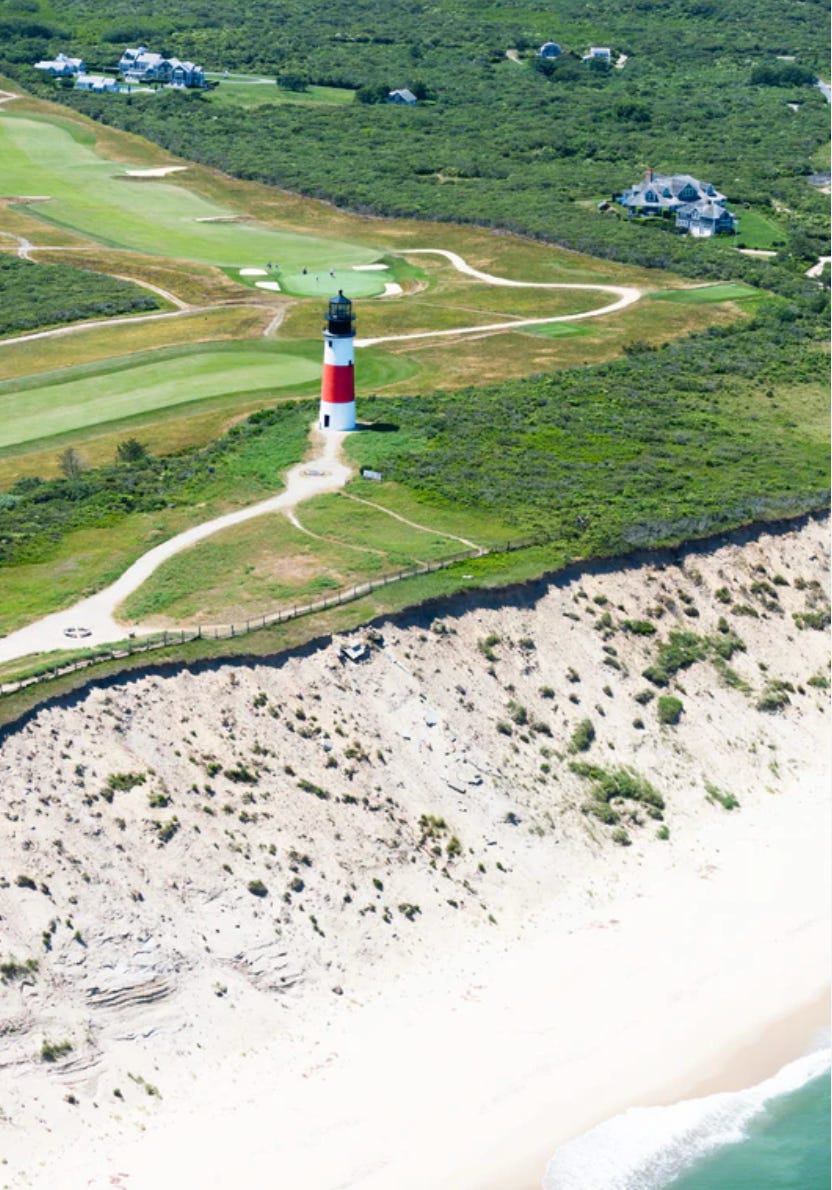
Twenty years ago, Sankaty Head Lighthouse was dangeroutly close to toppling into the sea. It was just 46 feet from the sandy bluff that the ocean is reclaiming. In the fall of 2007, Sconset Trust, its owner, relocated the 405-ton lighthouse 400 feet inland. This is like the 450-inward tug of Highland Light in Truro on Cape Cod a decade earlier. Each lighthouse was a victim of erosion accelerated by climate change’s sea level rise.
Each summer I drive by Sankaty Head Lighthouse.
At least once, but more, if I can.
I imagine its earliest days in 1850 when this lighthouse was lit to alert Atlantic-crossing ship captains to dangerous shoals nearby, on which many crews perished. A brigade of island volunteers in horse-driven carts loaded with life-saving equipment sometimes arrived in time to save the fortunate ones.
Day and night, Sankaty’s Lighthouse keepers made sure its massive beehive-shaped glass Fresnel lens - the first in America - flashed a parallel beam at sailors.
I’ve never seen Santaky Head Lighthouse from the bluff side, except in photos, nor flown overhead.
I’ve only seen it from its other side when I drive by on Sconset’s Polpis Road.
Pausing to feast my eyes on its candy-cane stripe and stunning top hat of glass.
Long enough to imprint a memory, until we meet again.
Each lighthouse with its distinctive shape, coloring and style leaves me with a new story.
Usually involving people who were with me at this lighthouse.
Or I’ll remember the occasion that brought me to it.
Like the Memorial Day weekend afternoon I spent on Great Point decades ago in the shadow of its same-named lighthouse.
After 10 of us drove there in two four-wheel-drive vehicles on sandy “roads” to linger on the pristine beaches near what the islanders call Nantucket Lighthouse.
We’d put swimsuits on under shorts and t-shirts and we had towels and blankets aplenty, and frisbies and footballs to toss. Picnic lunches packed with wine to sip.
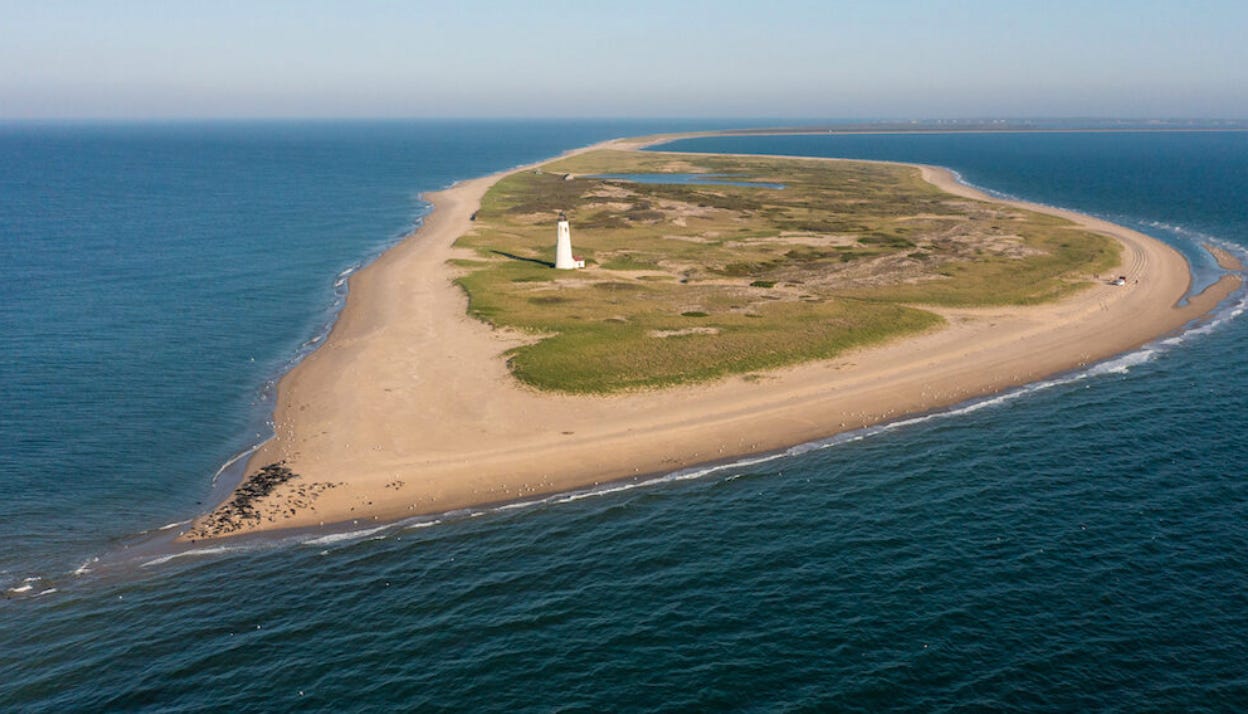
Great Point Lighthouse stands solitary guard on a spit of land where Atlantic Ocean currents meet the more tranquil Nantucket Sound. Once judged to be perilously close to the shoreline, the lighthouse wasn’t moved then, but on March 29, 1984 a hurricane-force storm toppled it. Senator Edward M. Kennedy, a Nantucket Sound sailor, secured two million dollars in federal money to rebuild and relocate lighthouse, moving it 300 yards inward from its former location.
Still to this day, whenever I see the Great Point Lighthouse from a distance, memories swirl and I see myself taking those quick dips in May. I’m still able to feel the chilly water and then return to the lengthy respites we took on the beach as friends.
I also revisit memories when I stand in front of this Edward Hopper painting at the Museum of Fine Arts. and when I buy the notecards so I can share my love for this Maine outpost with friends.
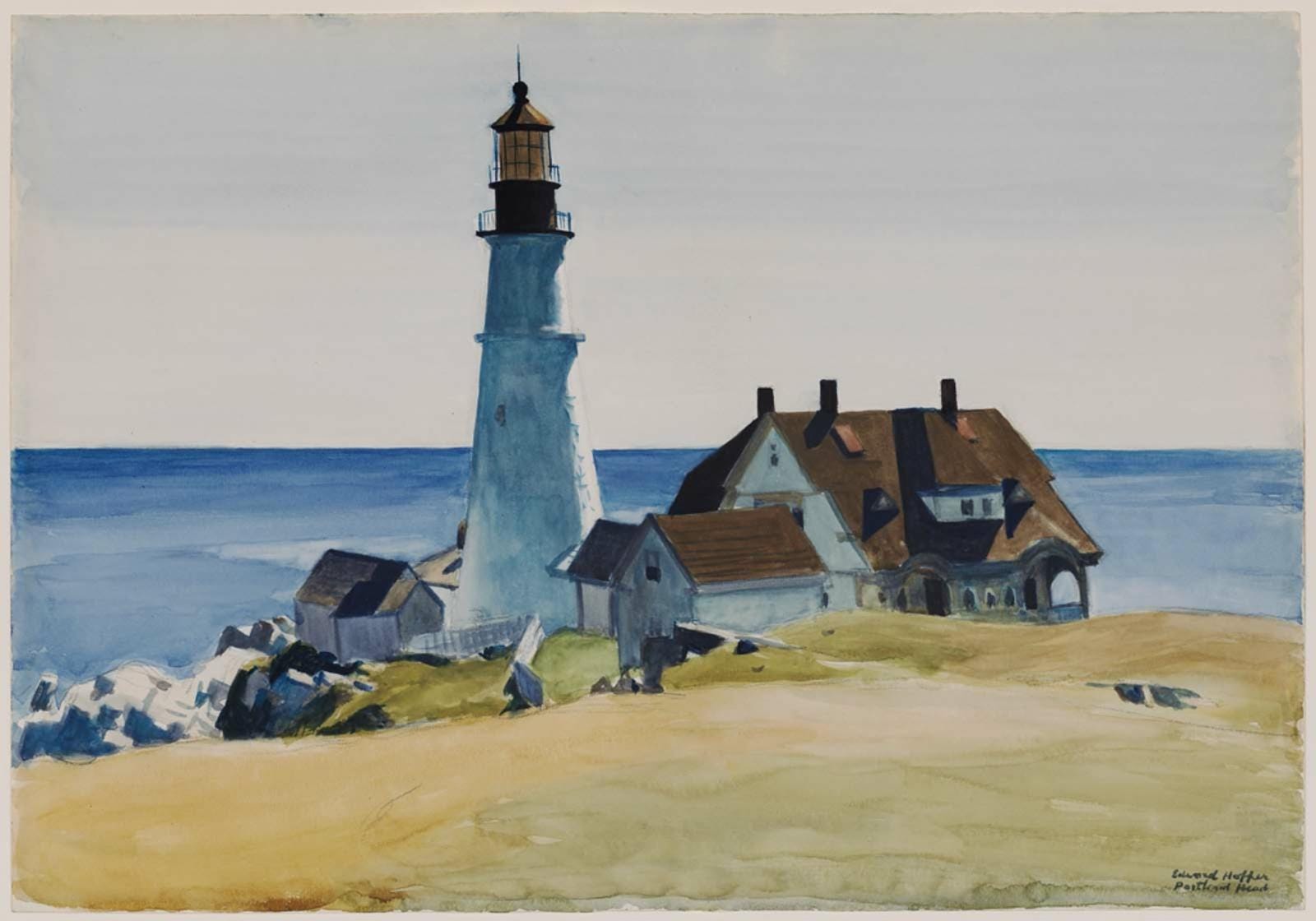
Lighthouse and Buildings, Portland Head, Cape Eizabeth, Maine by Edward Hopper (1927).
And each summer when I glimpse from the ferry Nantucket Harbor’s stout Brant Point Lighthouse, I’m recall the many time I sailed by this lighthouse, too.
Reliving the joy those sails gave me as I see this lighthouse now.
Knowing that by sail or ferry, I’ve arrived in a place I love to be.
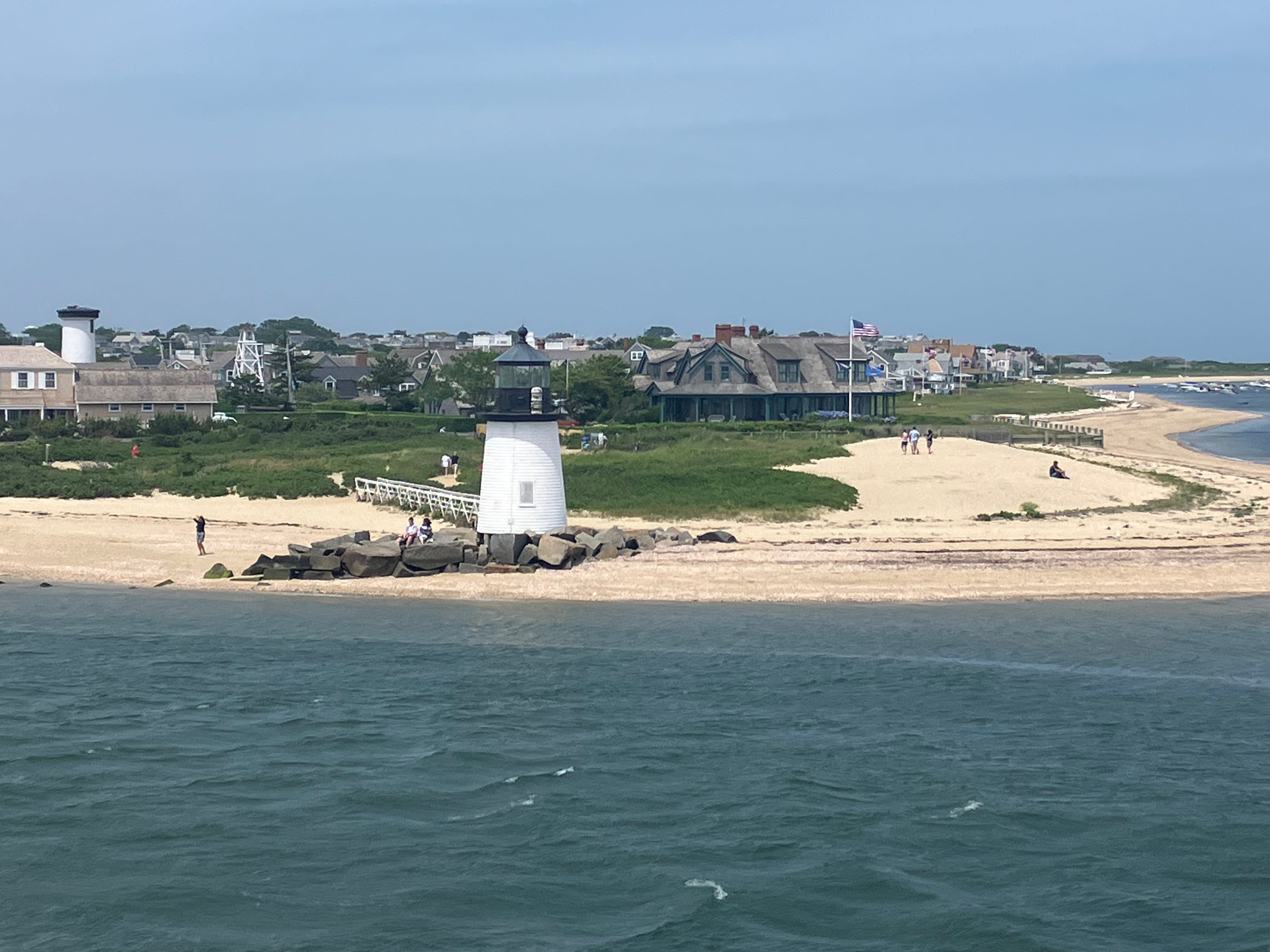
The Lighthouse, by Becky Jennings
The mighty lighthouse stands secure,
Undaunted by the restless sea;
Ravaged by the changing tides
And buffeted by winds blown free.
Yet, it sheds its beacon straight and true,
Unfaltering in the bleakest night,
Guiding every passing ship
Uncertain of the course that’s right.
May we be diligent and true,
Dedicated to the right
And like the stalwart lighthouse stand
A beacon in the darkest night.
My Friend, Felicia Penn, May 21, 1953 - June 15, 2026
May we be diligent and true,
Dedicated to the right
And like the stalwart lighthouse stand
A beacon in the darkest night.
As lighthouse beacons guide sailors away from rocky shoals, my friend Felicia was a beacon in guiding her community with her steadfast values lighting the paths ahead.
Uplifting those navigating in tougher waters or facing headwinds.
Friends came to her as trusted sounding board. As an inspiring companion, too.
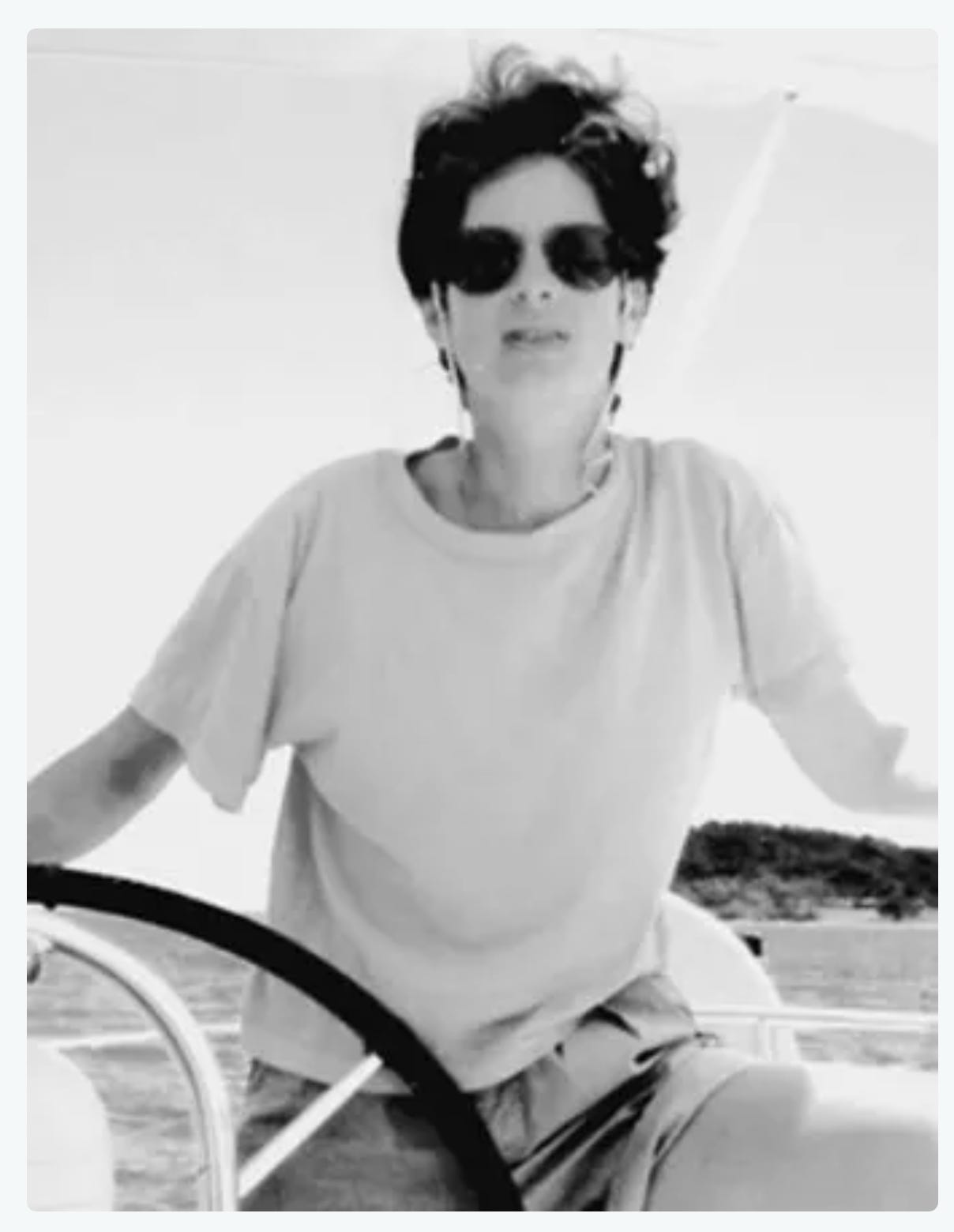
My friend Felicia Penn died on Sunday. When I publish this essay, I will be on the Cape celebrating a life in which conviction generated action for the community good. Hers was also life made bountiful by her love of family and friends — and of sailing!
As one of her friends commented after reading Felicia’s obituary:
Her example taught me that leadership isn’t about titles; it’s about making your community a little better than you found it. She was also hilariously funny, wonderfully sarcastic, and never afraid to tell you exactly what she thought—usually with a perfectly timed eye roll and a joke that landed before you realized you were being taught a life lesson.
Her life and mine came together in our shared love for the Cape.
Most recently we worked together in a battle to save a treasured space in the “village” of Hyannis, where Felicia was born, raised and died.
First, as a child, later with her husband, Felicia lived in the house her parents bought six months after she was born in 1953.
In working alongside her, I had a close-up view of the inner workings of what I’d only heard about – her legendary capacity to advocate strategically for the greater good.
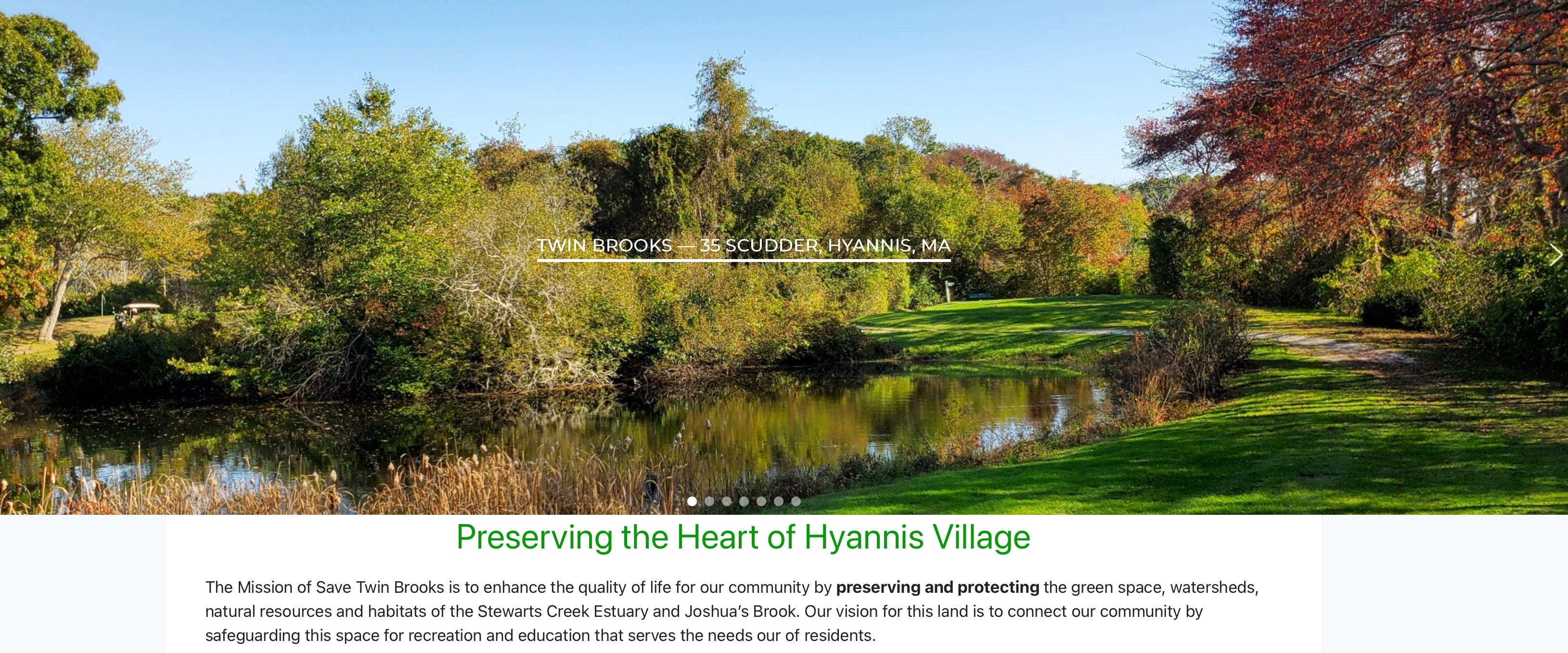
Each of us was volunteering on the grass-roots project Save Twin Brooks that locals formed to protect the town’s environmental blessings from the rapacious grasp of an outside developer.
The odds were against us. Sadly, that’s not an infrequent circumstance on Cape Cod.
I was struck by Felicia’s outer calm, her steady composure, when she gave public testimony. To prepare, she’d summon facts, then use them in telling a story with a clarity that made her argument reach those who don’t travel in the loop of power.
Concluding one night’s brief testimony, Felicia said: “When private property usage impedes the public good, it’s time to say no.”
It took awhile, but in time enough others agreed. The residents won, sending the developers packing, while Hyannis preserved its precious woods and wetlands, its water ways and land that long ago was a cranberry bog. [See photo above.]
Tenacious and outwardly fearless, Felicia stayed steady and focused. Under pressure.
Fortunately, her traits were contagoius to those of us lucky enough to be close enough to catch them. I learned that her unflappable demeanor was buttressed by a backbone fortified by weathering the nasty criticisms well known to those willing to challenge the powerful players.
She was not deterred.
Several months before being diagnosed with cancer — and after many years of civic service, including top leadership roles on town committees and seats on institutional boards – Felicia was elected to the Barnstable Town Council.
Then, the council elected her as its president – a first for a first-time council member.
Felicia wrote Barnstable residents to express gratitude for their support:
I do not take your votes of confidence lightly. During the election season, my constituents clearly asked for change... they want to see a Council that is responsive to them. They also showed lots of concern about an inner circle of influencers who seemed to be benefitting personally from certain town policies. I pledged during my election speech that I have no conflicts and do not personally benefit from any policy or businesses located in town. This term is not about me, but about "we". I aim to make constructive changes to how the Council works together and how the public will benefit as a whole from those changes. Stay tuned....the changes will be incremental, but they will happen.
She convened numerous conversations as a first step to proposing changes in how to do the town’s business in ways benefitting the many instead of pleasing the few.
Through some tough council deliberations, I admired her calm under intense fire.
I watched as she held her ground by explaining again and again what she’d heard to convince her that this new course was the right and necessary one to take.
Right, not because she believed it so, but “right” because she’d listened well for many years to those whose voices and experiences too often were ignored.
Anyone listening to her could tell that she’d dug deeply into these issues.
Issues she knew, felt and experienced, as a town native would.
Issues she understood after serving in various civic roles to address them, as an active resident does.
Issues she embodied, as a woman who cared enough to be there for others when they needed help, and she had the heart and skills to meet the moment.
I’ll miss Felicia terribly.
So will a lot people who never knew her.
People who never had the opportunity to tell her thanks for what she did for them.
What she did for this place they call home.
Updates + Book Talk
“Meet the new bosses, worse than the old bosses”
In last week’s essay I touched on a time in our nation’s history when oligarchs ruled. Implicit was a sense of deja vu, as if what our forebears lived through is comparable to what we are living with today. But as economist Paul Krugman made clear this week, the 19th century Gilded Age was not nearly as gilded or as grifting as what imperils us today.
So, are we living in a second Gilded Age? If only. We surpassed Gilded Age levels of income and wealth inequality decades ago. We’re now in an era of oligarchy in which the power of great wealth and the abuse of that power by a tiny elite eclipse anything we saw in the late 19th and early 20th century. And the super-wealthy themselves are far more lacking in redemptive qualities than their predecessors.
Meet the new bosses, worse than the old bosses.
[Paul Krugman, Meet the New Bosses, Worse Than the Old Bosses: The second Gilded Age is much uglier than the first, June 15]
Rowing Her Boat
I also wrote about solo rower Kelsey Pfendler, who is now 28 days into her exhausting 2,400-mile row from California to Hawaii. She is attempting to break multiple world records – trying to be the first American woman to achieve this feat, and the fastest and the youngest woman to do this row.
This week Outside magazine published a story about her row after speaking with her on WhatsApp. Topics include her extreme sleep deprivation and intense isolation, along with the physical toll of the open sea. She’s on target to set these records.
I learned this about Kelsey’s solo journey:
I brought some stuffed animals to keep me company. I have an octopus and a crab that, especially the first week, were really comforting just to have something to hold onto when I’m sleeping. They’re like, silent observers of me sometimes, and it’s funny. It almost feels like they’re holding me accountable.
Baseball Memory
If you want to hear/watch my Cooperstown Symposium speech on Baseball and American Culture + Women that I gave at the Baseball Hall of Fame on my 75th birthday, here’s the link. Feel free to share it.

I share your love of lighthouses. For me, the beacon is the Dungeness Lighthouse on the Olympic Peninsula, facing the Strait of Juan de Fuca. I love it and have a wonderful photo of it. It still shines, and it has a Keepers program.
Love this piece. I'm drawn to lighthouses too so I'm so glad you wrote this. You pick such interesting topics.