
Let's Row Together
Ready for AI's side effects? Check the label before you buy in. And an AI writing study delivers worrisome news, especially for youngsters. We've got AI climate concerns, too.

Have I’ve got a deal for you!
Listen up.
I’ll give you a tool that replicates – and “enhances” – what we, as humans, do.
In exchange, here are its side effects. Weigh those, then decide if you want to buy it!
Its content will further erode our weakened trust of civic institutions, as it eases the spread and reduces the detectability of lies and fake news.
As it assumes more intimate roles in relationships with us, more mental health challenges will surface – and deaths will occur.
Its usage moves our teetering climate closer to irreversible tipping points. (But take heart: AI might lead us to human extinction before climate change does.)
Here’s the kicker: By using this tool to write, we lessen our brain’s connectivity, compromising our ability to recall what “we” wrote - even 60 seconds earlier.
So, here’s the tool — AI, artificial intelligence, marketed as “progress” — the inevitable next step for humankind, masterminded by those who brought you social media.
Review bullet point #1!
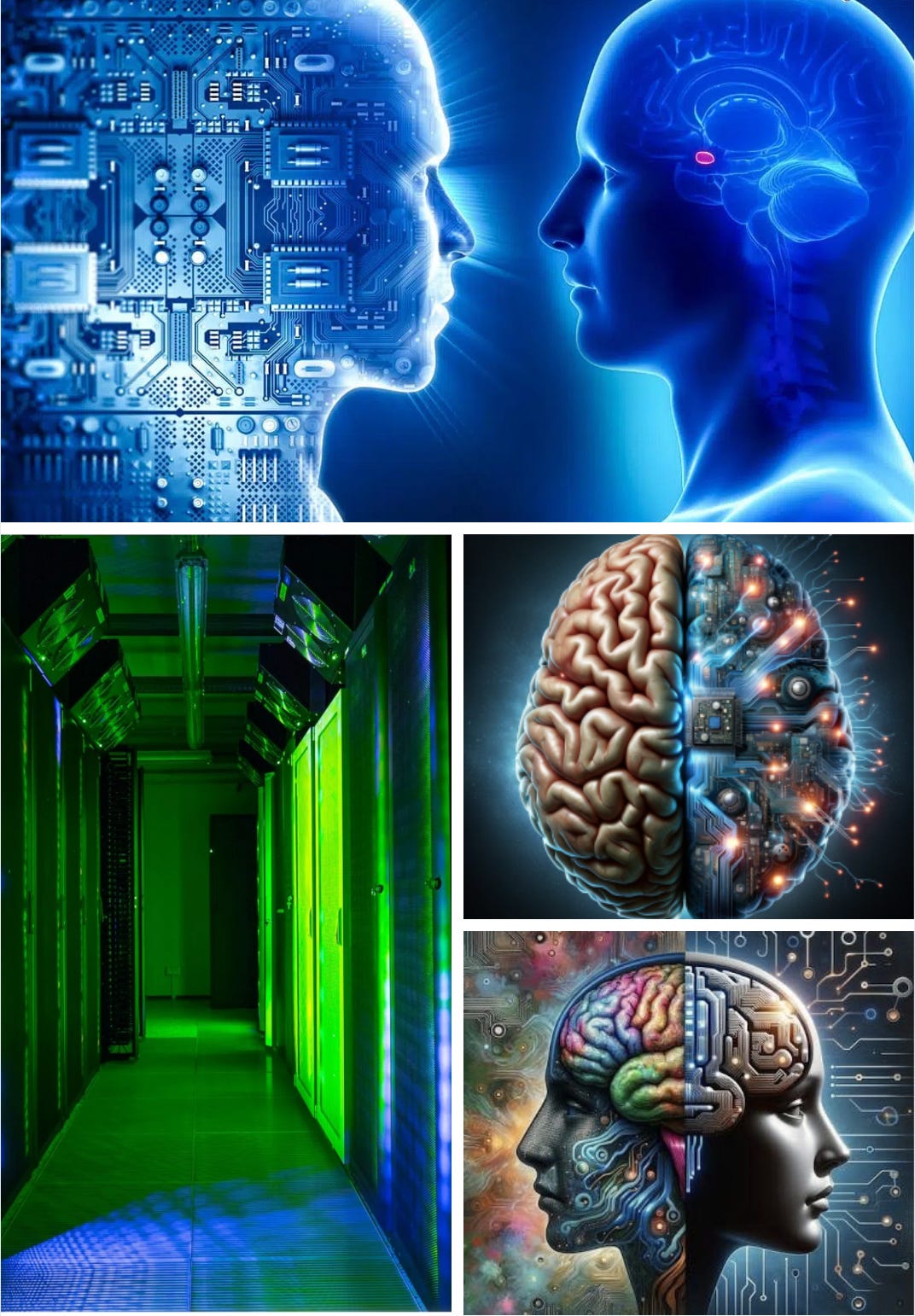
A caveat: No observation I offer about AI’s side effects emerges out of science fiction. Instead, they come from stories, podcasts and essays I read or heard this week.
Don’t be surprised when I stay in my lanes of knowledge and activism — writing and climate, though I’ll offer you links to info about additional AI side effects.
Or you can ask AI!
Writing and Your Brain
"Your Brain on ChatGPT: Accumulation of Cognitive Debt when Using an AI Assistant for Essay Writing Tasks."
This week I listened to this On Point podcast. This public radio show digs daily into pressing issues. In this episode, the host and her guests conversed about how the act of writing affects our brain. They began by exploring findings from MIT Media lab’s study gauging effects on the human brain’s cognitive capacities when we use ChatGPT to write.1
Relying on the transcript, I chose excerpts with salient guidance about what happens to our brains when we write. Quotes are in italics, slightly edited for space. The bold highlights are mine. I encourage you to listen to the entire episode.
“I decided let's try to understand what exactly is happening in one's brain when you use a large language model like ChatGPT.” Nataliya Kos-Myna (N. K-M), senior researcher at the MIT Media Lab and an author of Your Brain on ChatGPT.
The Method N. K-M: We divided students in three groups to write essays on generic topics. One group was allowed to use ChatGPT. They couldn't go to any other chatbot or anywhere else for help. The second group was allowed to use search engine and more specifically, Google. … We did not allow that third group of students to use anything except their own brain.
While writing their essays, brain activity was captured non-invasively through caps on the students’ heads with electrodes measuring brain connectivity. English teachers who did not know about the study, graded the essays for quality of the argument and the researchers questioned the students to gauge benchmarks.
N. K-M: For example, can you quote what you just wrote? And why did you write about this topic? We asked questions like that.
RESULTS: N. K-M: We found with introduction of the tools, there is reduction of this brain connectivity. … to summarize, students who were in brain-only group showed the most widespread brain connectivity. … ChatGPT Group, our final group, showed the least of this brain connectivity. Again, it doesn't mean that the brain went on vacation. The brain was working, just not as actively in those specific areas. There is a lot less of this [brain] chatter and exchange and conversation happening.
Prior research tells us the areas of the brain [we studied] are responsible for creative thinking, critical thinking, episodic memory, and very important language development. We want to understand what it effectively means if you have less of that activity present, specifically in this case, connectivity.
HOST Meghna Chakrabarti [M.C.]: Some essays were better than others?
N. K-M: Yes, absolutely. … the essays of ChatGPT participants were very homogenous, using very similar vocabulary.
HOST M.C.: So, with each additional layer of technological assistance, let me roughly call it, you saw more and more homogeneity in the thinking on the page. [Yes, came the reply.]
FINAL STAGE of the study2: If you were a ChatGPT-assigned group in the first three sessions, in this fourth one, we took AI access away and you became a brain-only participant. And vice versa: If you were originally a brain-only participant, for the fourth session, we gave you access to ChatGPT. And we did one more thing; to write your essay, we’d give you not the new essay topics to choose from but the topics you’d written about in your previous three sessions. … They are not new to you so it's not a surprise or an additional cognitive load.
RESULTS N K-M: If you were originally a ChatGPT participant and you became a brain-only participant, your brain connectivity never matched the truly brain-only participants. It was always inferior. However, if you were a brain-only participant, then we gave you access to ChatGPT, your brain connectivity was significantly higher compared to [this fourth essay’s] brain-only participants. Meaning that if you did the work with your brain only first, and then got access to the tool, you had better brain connectivity.
Just to give an example, 83% of participants in ChatGPT group couldn't quote anything 60 seconds after they turned in the essay. Not even a day, a week, but 60 seconds.
But what is more important is their overall engagement. [The brain-only writers] provided us with so many details, verbatim details about their essays. We even didn't ask for those, but they almost all quoted essays fully because they were so engaged in the topics. They wanted to share their opinions just based on one question, like, why did you pick this topic? People want to share. That was definitely not the case with the ChatGPT group. I think this is very important, and this is where maybe more of the doom and gloom creeps in.
Barry Gordon, who directs the Cognitive Neurology and Neuropsychology Division at Johns Hopkins University, joined the conversation:
HOST M.G.: What I glean from Nataliya is that when various parts of the brain are engaged in a task like writing, people learn it better?
B.G.: We definitely have evidence that the more effort you put into it, the more the brain makes those connections, pulling out things they hadn't thought of before, strengthening the weaving between them all.
HOST M.G.: Is the main take-away to make the brain work first, then use the AI tools in a way to enhance the written product?
B.G.: That’s a good strategy. You really have to since there’s another part we haven't talked about. Brains want to be lazy. Using a brain is a very energy intensive process and our brains have been built, in part, to try to take the easy way out. But we know from history of exercise that you've got to put some effort into it to get real, lasting benefits.
HOST M.G.: Brains want to be lazy! That makes me think it's a real uphill battle, especially for young people. … They're more likely, not even just them, anyone is more likely to just put in the prompt, as Nataliya talked about. We have to train ourselves not to do that.
B.G.: Absolutely correct. Dr. Lieberman wrote “Exercised: Why Something We Never Evolved to Do Is Healthy and Rewarding,” which tells us that exercise was something we had to do in the past to get food and survive. Now that we don't have to do it, we don't really like doing it most of the time, but we have to do it for our health. In some ways, the AI tools are going to take away some of the motivation, but we have to provide that ourselves.
N. K-M: But I want to just caution very carefully that all of us [in the conversation] were born before Large Language Models, right? And we learned how to write, how to ask questions, how to ask difficult questions, how to structure our words. So, we know how to do that. We are able to create those drafts. We are able to ask questions, right? Out of concern, we should all be asking important questions about younger adults, teenagers, kids, this upcoming generation. Are they fully set on learning how to extract information, work through information, create a draft and ask questions?
Let me add my two cents: In listening to friends who are professors and teachers, the answer is absolutely NOT; students find it hard to avoid AI’s temptation; what’s easy and seductive often wins out. To their detriment, and ours. AI leapt into their lives before the necessary preparation could happen.
Climate and AI
We’ve warmed Earth’s climate to its breaking point. Add AI’s ravenous energy appetite for its data centers – with power constantly heating and cooling machines – and we quicken our gallop toward reaching frightful tipping points. There is some good news when we hear that corporations are powering their massive data centers with their own supplies of renewable energy. But not enough of them do this, so AI’s ungoverned proliferation strains our electrical grid and accelerates Earth’s warming.
Earth’s Heat
Imagine Paris at 122 degrees Fahrenheit, or 50 degrees Celsius.
The asphalt streets would melt in spots, making it virtually impossible for ambulances and buses to pass. The lights and fans could cut out in neighborhoods if underground cables burned or junction boxes shifted. Cellphone service might go down as antennas on boiling rooftops stopped working. Trains would halt as outdoor rails swelled, keeping nurses, firefighters, and electricity engineers from reaching their jobs when they were most needed.
Those are situations city officials are planning for.
“A heat wave at 50 degrees Celsius is not a scenario of science fiction,” said Pénélope Komitès, a deputy mayor who oversaw a crisis simulation two years ago based on those presumptions. “It’s a possibility we need to prepare for.” - Boston Globe, “Paris braces for a future of possibly paralyzing heat”
In 2025, some cities in Pakistan experienced heat index values above 50 degrees Celsius, classifying them as “danger” zones with high risk of heat exhaustion and heat stroke.” Ditto for the Middle East. And Europe is warming the fastest of all the continents, heating up at nearly twice the global average rate since the 1980s.
Nearly half of the planet has experienced record- or near-record-high minimum temperatures since the start of June. That includes unprecedented overnight warmth across much of the eastern United States and parts of Europe and Asia. At the same time, nearly two-thirds of those areas have also endured record or near-record levels of humidity. The United States is suffering through one of its most humid summers on record, with 18 states and D.C. experiencing record humidity levels during July. - Washington Post “How surging summer humidity is making nights hotter”

Nobel economist Paul Krugman writing on Substack: “This isn’t about AI causing unemployment by replacing humans. We’re talking instead about the risk of a recession if the current surge in AI-driven investment turns out to be unsustainable. … We also have an additional worry: Will companies spending huge amounts on AI hit the brakes once they realize that they won’t be able to power their data centers? The point is that the mismatch between the immense amounts of electricity data centers are expecting to use and the generating capacity we’re likely to have isn’t just a problem for the companies sinking hundreds of billions into AI. It’s a threat to the economy as a whole.”
Krugman tells us that the power behind Elon Musk’s ugly words on Grok [his xAI vehicle] are methane gas turbines he installed spewing pollutants in environmental-justice neighborhoods. The local electric grid can’t power xAI reliably.
Elon Musk’s artificial intelligence company is belching smog-forming pollution into an area of South Memphis [99.5% Black population] that already leads the state in emergency department visits for asthma. [from Politico, May 2025]
None of the 35 methane gas turbines that help power xAI’s massive supercomputer is equipped with pollution controls typically required by federal rules.
Water, Water Everywhere, with not much to spare

“A 2024 report from the Lawrence Berkeley National Laboratory estimated that in 2023, U.S. data centers consumed 17 billion gallons (64 billion liters) of water directly through cooling, and projects by 2028, those figures could double – or even quadruple. The same report estimated that in 2023, U.S. data centers consumed an additional 211 billion gallons (800 billion liters) of water indirectly through the electricity that powers them. But that is just an estimate in a fast-changing industry.” The Conversation, “Data centers consumer massive amounts of water - companies rarely tell the public exactly how much.”
Links to more side effects
‘Primal Intelligence’ Review: Why Brains Are Better: Artificial-intelligence tools can process huge amounts of data. Yet they lack the human mind’s capacity for intuitive understanding. - Book review, Wall Street Journal, August 13
“What is ‘AI psychosis’ and how can ChatGPT affect your mental health?” Washington Post, August 19
“Our mental health in the hands of AI” On Point
“AI Schemes Could 'Make Bernie Madoff's Fraud Look Trivial'” Harvard Business School
“AI Undressed Women and Girls ‘For Fun', Makes 36 Million in Profit.” Medium.com
The AI Doomers Are Getting Doomier: The industry’s apocalyptic voices are becoming more panicked—and harder to dismiss. The Atlantic, August 21
Don’t Miss This Webinar
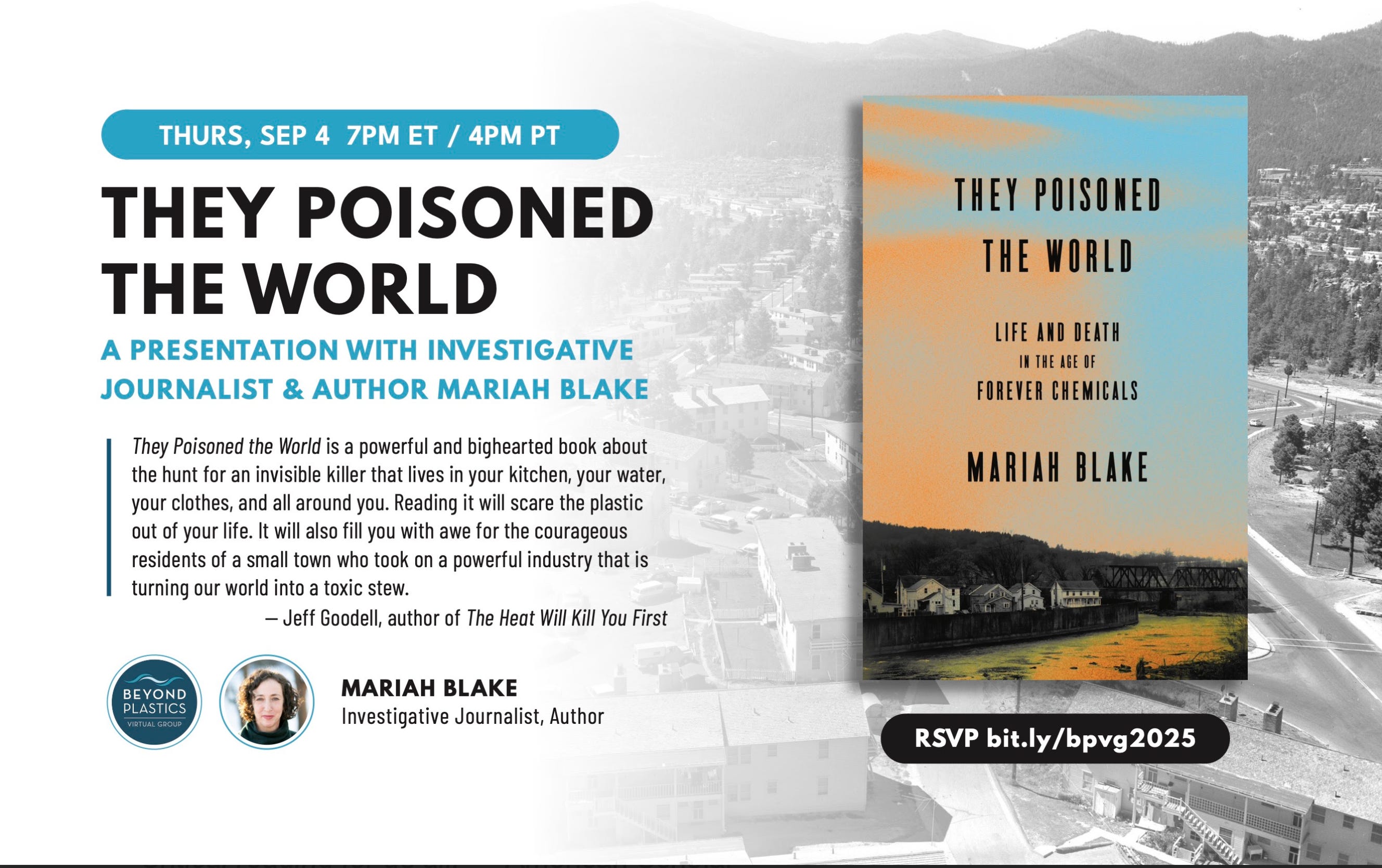
Join us Thursday, Sept. 4 at 7 pm ET / 4 pm PT with investigative reporterMariah Blake, author of They Poisoned the World: Life and Death in the Age of Forever Chemicals.
Click here for this presentation.
Locker Room Talk: Bargain Basement Price + Free Shipping

Use the code RSUMMER50 at this link to buy Locker Room Talk at 50% its original price + FREE shipping, courtesy of my publisher, Rutgers University Press
Tuesday, October 28, join me at NYC’s 92nd Street Y for a public conversation with Secretary Hillary Rodham Clinton.

In a rare and deeply personal conversation, Ludtke sits down with longtime friend Secretary Hillary Rodham Clinton for a galvanizing evening exploring the lives of gutsy women — women with the courage to stand up to the status quo, ask hard questions, and get the job done.
Guided by Secretary Clinton’s “The Book of Gutsy Women” and Ludtke’s memoir “Locker Room Talk,” the two spotlight the lives of iconic changemakers whose courage shaped the world … Their legacies fuel a conversation about civil rights, gender equality, and the personal stakes of public fights.
More than a retrospective, this is an urgent dialogue between two women who have been on the frontlines of politics, of the press, and of social change – reflecting on what it means to stand up, break through, and bring others with you.
In-person and live-stream tickets went on sale last week. In-person seats are sold out; the 92nd St. Y has created a wait list. Sign on if you’d like to be with us; our event might be moved to a larger space. I’ll keep you posted. Live stream tickets are an option.
None of my Substack essays use Chap GPT or any other AI writing tool in their creation.
Just 18 students participated in the fourth session, a lower number than in earlier ones, which means researchers were less able to draw conclusions from their findings.