
Let's Row Together
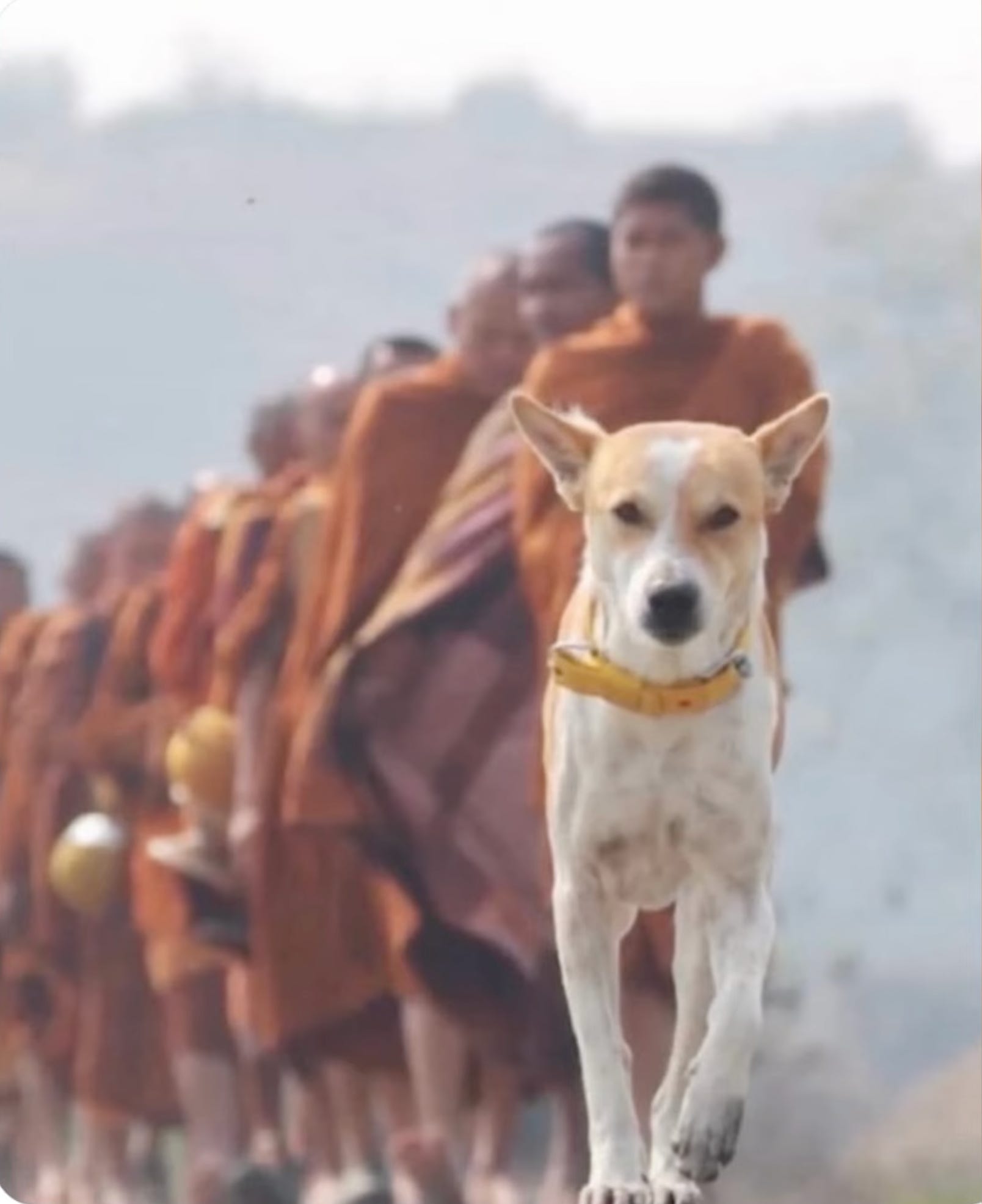
Aloka, once a stray dog in India, captures the hearts and moves minds of those who see him with his fellow travelers, Buddhist monks, on their 2,300 mile Walk for Peace from Texas to Washington, D.C..

I’ve fallen in love with a dog.
His name is Aloka.
I check on him daily.
On many days, I do this more than once.
I watch videos. Look for photos. Discover stories.
Not long ago I tracked Aloka’s well-being when he had to leave the Walk for Peace to undergo leg surgery due to an injury he’d sustained during the walk.
Marveling at his recovery, I followed him from the Charleston, S.C. veterinary clinic to North Carolina so I could feel a part of his brief, spirited reunion with the monks, as they walked in Charlotte, North Carolina.
I also heard Aloka’s insistent whimper when he had to watch the monks walk as he rode in the van. When he longed to be at their side.
Instead, he stared mournfully at them from the van’s side window.
Today, Aloka has returned to the monks to stay, though his walking time will be paced to his recovery and weather conditions.
A message from the monks:
We are filled with deep joy to share that today, on Day 89, Aloka has reunited with the venerable monks and will remain with us from now on. As Aloka continues healing and recovering from his recent surgery, he will mostly refrain from walking on the road until he is fully healed. His comfort, safety, and complete recovery remain our highest priority, and he is being lovingly cared for as he travels alongside us. Having Aloka back in our midst has brought a profound sense of warmth and peace. His gentle presence, quiet resilience, and unwavering trust remind us—again and again—of the compassion, patience, and loving-kindness we owe to all living beings.
Aloka was a stray in India when he first walked alongside these monks on their 112-mile peace walk there. Other dogs had walked with them before Aloka did, but he was the only dog to walk with them and never leave.
No human chose Aloka to be theirs. Aloka chose his forever human companions.
Those companions named him “Aloka.” In Sanskrit (आलोक), Aloka means light, radiance, brightness, illumination.
In essence, enlightenment. To my mind, this is what Aloka embodies.
An enlightenment America needs. Urgently needs amid the violence, the cruelty and meanness, the rage and anger rising amidst the horrors of ICE we’re experiencing.
Aloka, an Indian Pariah (free-ranging) dog, embodies his human companions’ soaring message of peace in the joyful bounce in his steps and the intense devotion displayed in his smile of contentment.
Then, there is the white fur heart on his forehead.
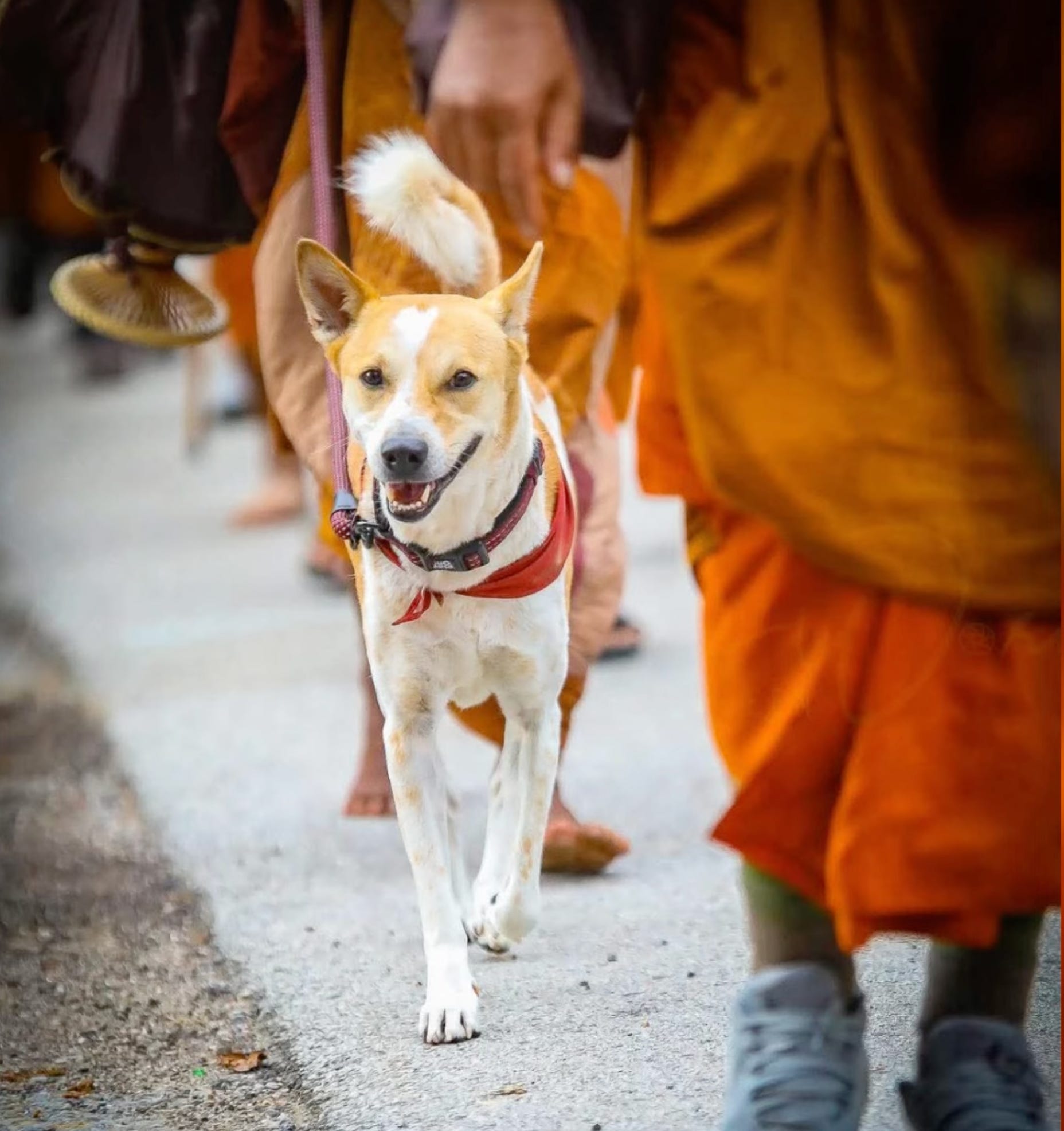
Aloka flew from India to America with his fellow walkers. A GoFundMe campaign raised funds necessary to give Aloka the medical care, transport and initial housing he needed to be brought into this country.
His human family are Theravada Buddhist monks now being led by the Venerable Bhikkhu Paññākāra, on a three-month, 2,300-mile Walk for Peace, from the Huong Dao Vipassana Bhavana Center in Fort Worth, Texas to Washington, D.C.
The monks’ ancient practice of mindful walking – steady steps and a calm presence – draws tens of thousands of people who line streets to welcome them with gestures of gratitude. In videos, I watch as people move their hands to prayer, raise them to their heart while bowing their heads, issuing a silent sign of human connection, seeking an inner tranquility to counter to the rage and chaos of our daily American lives.
The monks pause to tie blessing cords onto the wrists of those who have come to observe and share rare moments of stillness. The monks carry only daily essentials, eat one meal a day and move at a mindful pace, turning highways and back roads into shared spaces of reflection.
It’s not a march of protest but a reflection of their meditative practice: “Peace begins within,” they tell listeners at gatherings along the way, then demonstrate mindfulness and compassion as they continue their walk.
During the Walk for Peace, sheriffs and local police departments pin badges to the shawl that Venerable Bhikkhu Paññākāra wears, a sign of respect and support.
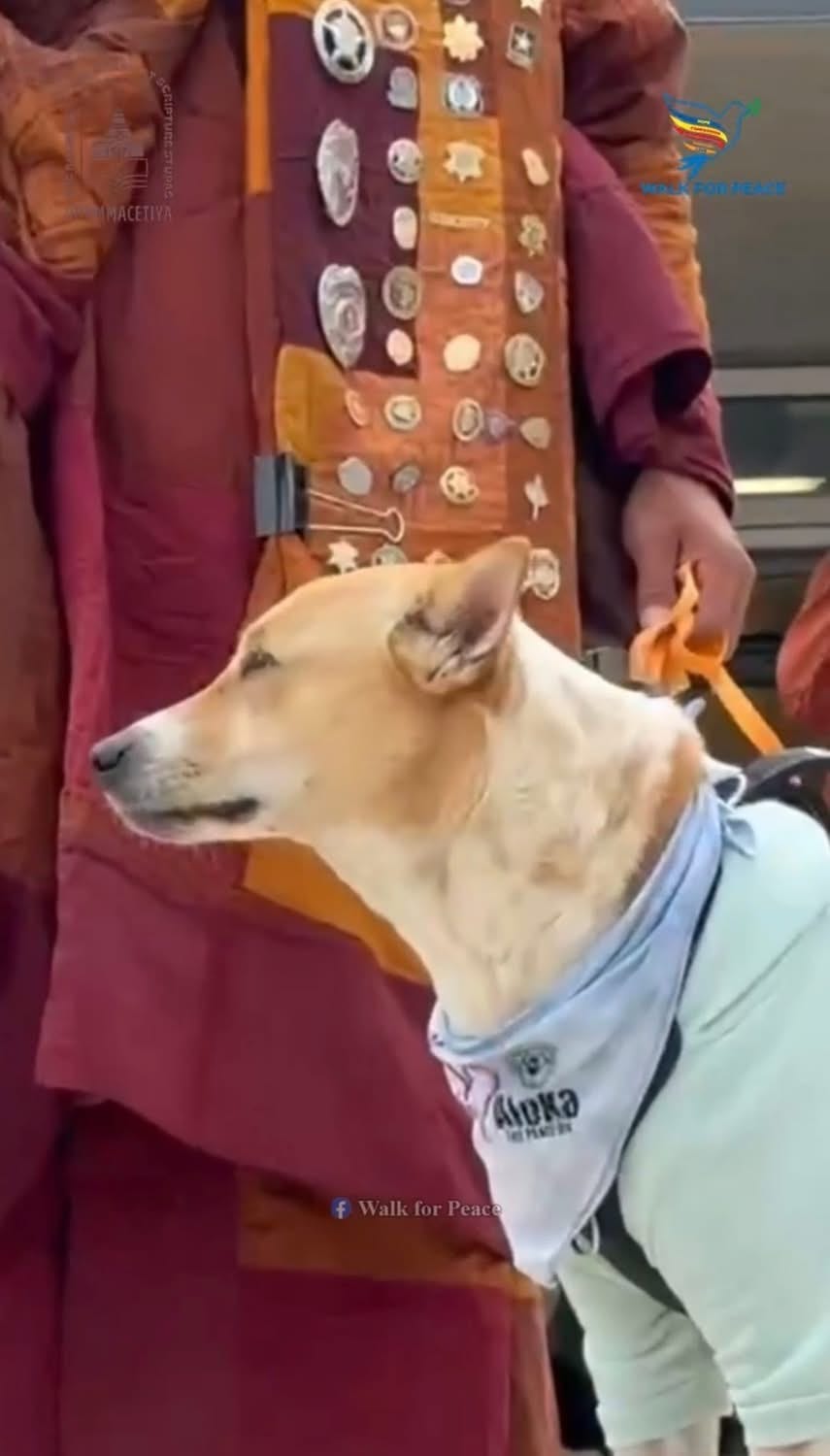
And Aloka inspires gratitude as the monks walk by.
Tears of joy spring up from my heart and flow down my cheeks. How could we have fallen so much in love with a dog and his Venerable Monks in such a relatively short time? So grateful that you are reunited. Deep bow to you all. Stay safe and warm. Many carry you close in their hearts. I am only one but you came at just the right moment with just the right message and are all precious to me. – Candace Brey
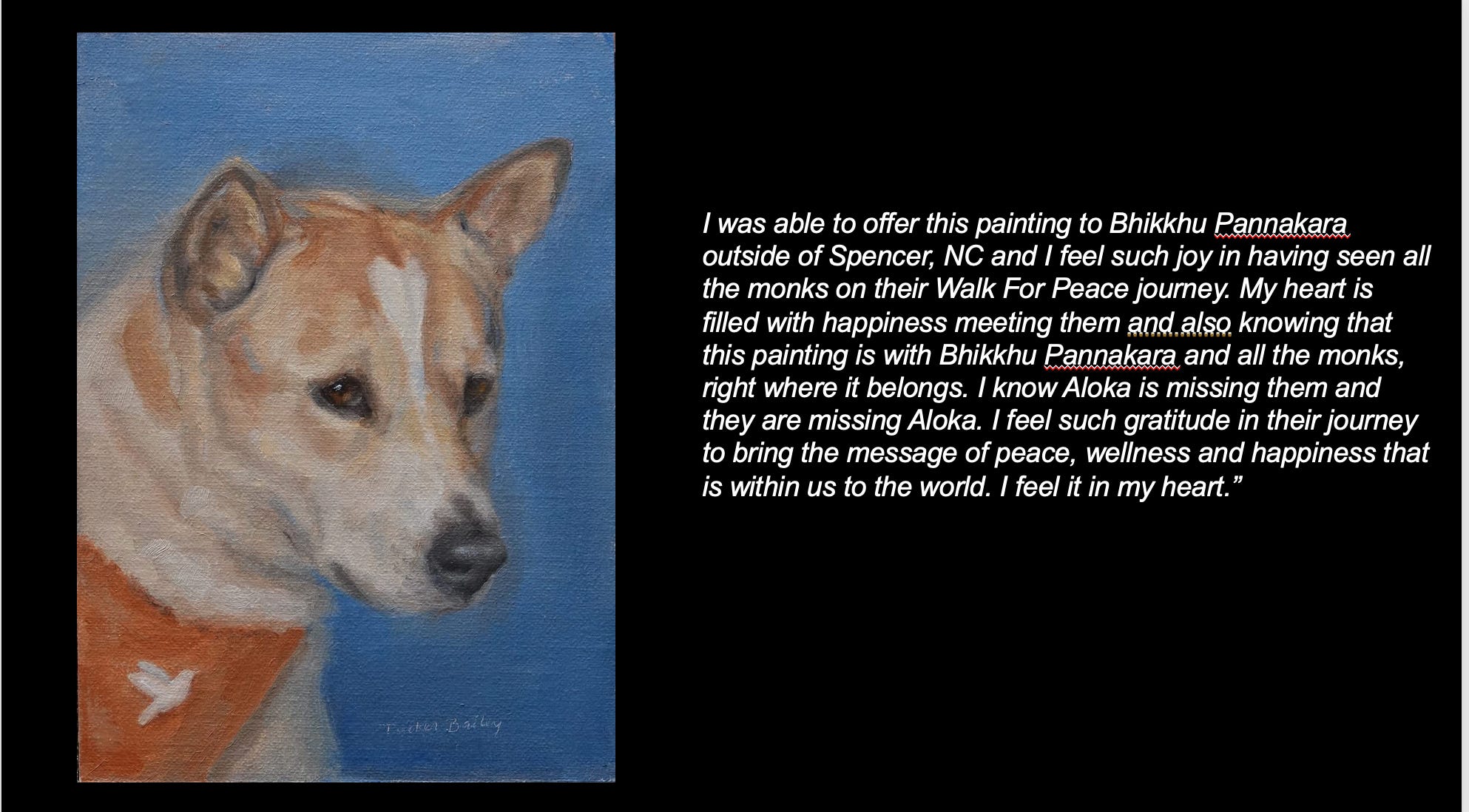
In Charlotte, North Carolina, my friend Alix Felsing watched the monks walk through her neighborhood. Her husband, Tommy Tomlinson, awaiting a knee transplant so he couldn’t join her at the Walk for Peace, wrote about her experience in his Writing Shed (Substack) essay, Peace in the chaos.
The monks just about walked right past our house.
It’s two blocks as the crow flies from our front porch to Hawthorne Avenue—a few blocks longer if you take the streets instead of cutting through the woods. We found out the monks were coming close on Thursday morning. I decided not to go because of my balky knee, but Alix went and stood in the cold and watched them pass
Thousands upon thousands of people have lined their routes as they walk, handing them gifts, kneeling in their presence.
Alix noticed two things in particular. One was the large contingent of police—officers, most on bikes, clearing the way for the monks and following beside and behind. The other thing was the quiet. Some people said thank you as the monks passed by. But mostly, there was silence.
It strikes me how different it was on some of these same Charlotte streets just two months ago. Back then, ICE and Border Patrol agents brought chaos to our town. They arrested hundreds of immigrants—most of whom had no prior criminal records. They harassed and intimidated US citizens and non-citizens alike. Just a couple blocks from where the monks walked, the agents shattered the car window of a neighbor who dared to warn people that the agents were coming. Children stayed home from school. Businesses closed. Charlotte was strong and resilient, but that overlaid the fear underneath. And of course, the fear was the whole point.
What happened in Charlotte, what is happening in Minneapolis, what happened in Chicago—it’s not about illegal immigration. It’s not even really about politics. It’s about fear and power and domination. - Tommy Tomlinson, The Writing Shed Substack
I worried this week, as so many others did, how the monks will handle the ferocious winter storm about to invade the places they are walking (and some of them walk barefoot). Yesterday, the monks shared how they will care for themselves and Aloka in the days ahead. (Aloka’s Facebook page gives you hourly updates.)
Our Plan for the Cold Weather: We are deeply touched by the outpouring of kindness and concern regarding the coming cold weather! Your thoughtful care for the Venerable Monks means so much to the entire team.
Please know that the Walk for Peace is continuing, and we are well-prepared for the dropping temperatures. We have ensured that everyone has adequate warm clothes and protection. Furthermore, our dedicated support team is ready with backup plans: we are prepared to take swift action to add necessary layers, seek safe indoor shelter, or adjust the walking schedule as needed, always prioritizing everyone’s health and well-being.
When the monks and Aloka arrive in Washington, D.C. in mid-February, they will ask Congress to recognize Vesak, the Buddha’s day of birth and enlightenment, as a federal holiday.
I hold out little hope that Congress will act. From what I can tell, they are mostly in hibernation.
I wish they would. Americans sorely need another day to practice peace.
Walks of Peaceful Protest
Watching the monks Walk for Peace brings to mind other memorable walks grounded in the philosophy of satyagraha.1
In 1930, Mahatma Gandhi took the first step of his 24-day, 240 mile Salt March with 78 followers. Thousands joined them in this nonviolent protest of Britain’s imposition of a salt monopoly and tax. His march led to mass civil disobedience, which resulted in nearly 60,000 arrests.
Gandhi regarded satyagraha (truth-force) as nonviolent, civil disobedience.
“In this age of the rule of brute force, it is almost impossible for anyone to believe that anyone else could possibly reject the law of final supremacy of brute force.” – Gandhi.
“Nonviolence in its dynamic condition means conscious suffering. It does not mean meek submission to the will of the evil-doer, but it means the putting of one’s whole soul against the will of the tyrant.” – Gandhi, both quotes are in The Doctrine Of The Sword (1920)
Martin Luther King Jr., who borrowed Gandhi’s nonviolent tactics in his struggle to end racial segregation, wrote that “the Christian doctrine of love operating through the Gandhian method of nonviolence was one of the most potent weapons available to oppressed people in their struggle for freedom.” Gandhi, he observed, gave King “the method for social reform that I had been seeking.”
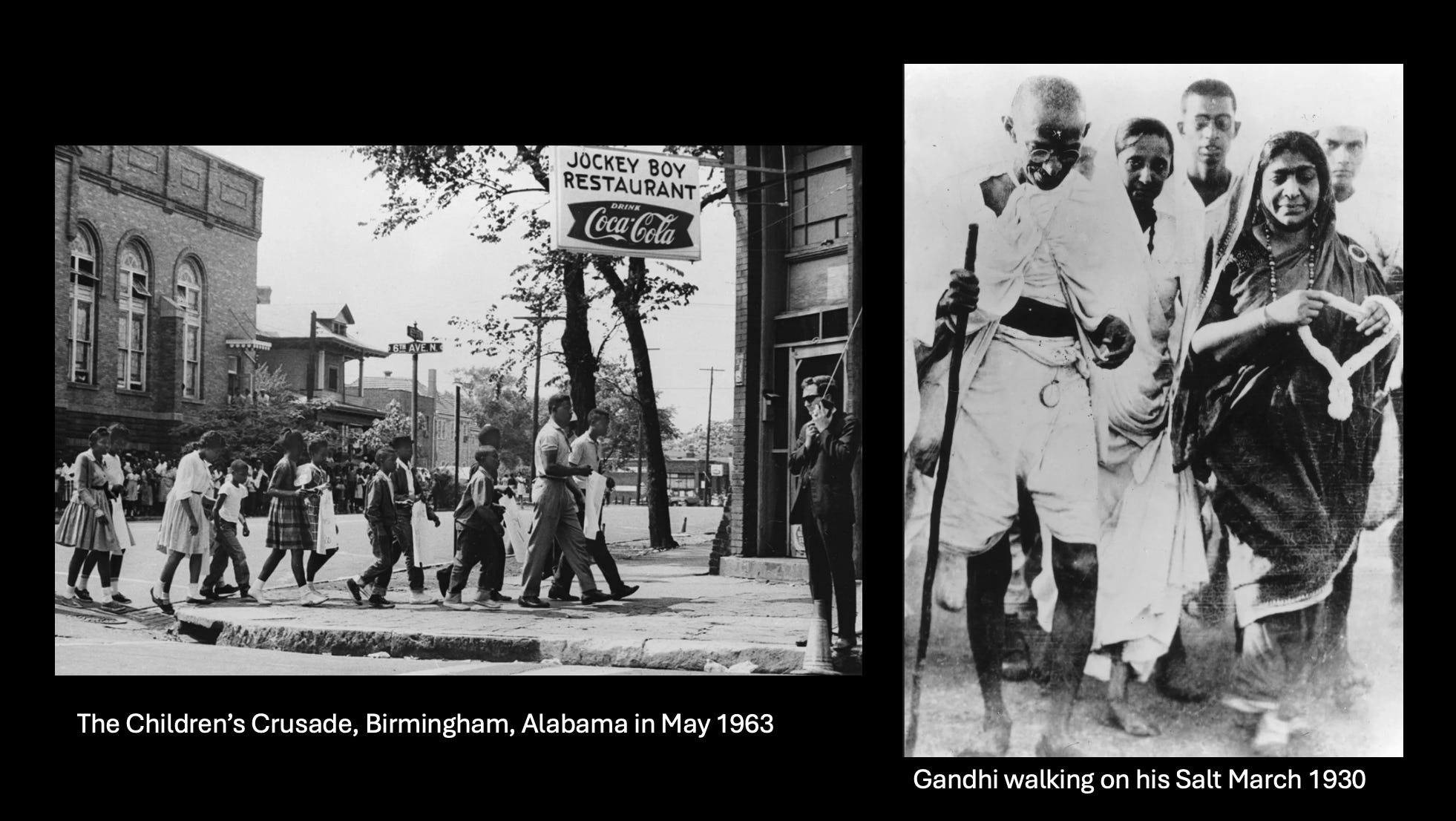
Dr. King told the audience that if God had let him choose any era in which to live, he would have chosen the one in which he’d landed. “Now, that’s a strange statement to make,” King went on, “because the world is all messed up. The nation is sick. Trouble is in the land; confusion all around.
… But I know, somehow, that only when it is dark enough, can you see the stars.” - MLK Jr.
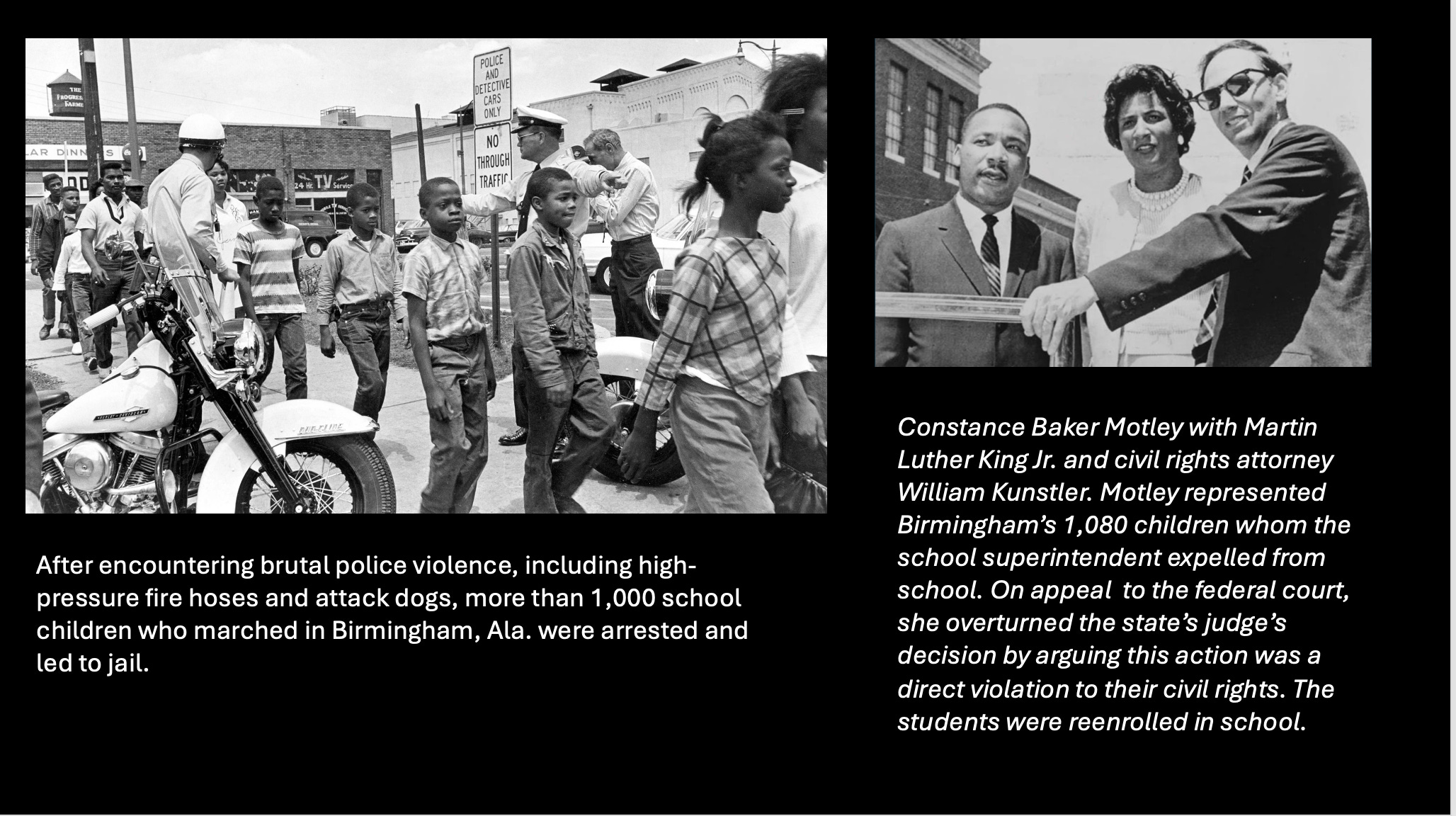
When she became a federal judge, Constance Baker Motley ruled in my 1978 equal access case, argued on the grounds of gender discrimination with a legal strategy based on the 1961 Supreme Court case, Burton v. Wilmington Parking Authority, on which Motley served as co-counsel as a civil rights attorney. In Locker Room Talk: A Woman’s Struggle to Get Inside, I describe Motley’s civil rights cases and their connection to my equal access case.
It is “dark enough” for us to see the stars, now
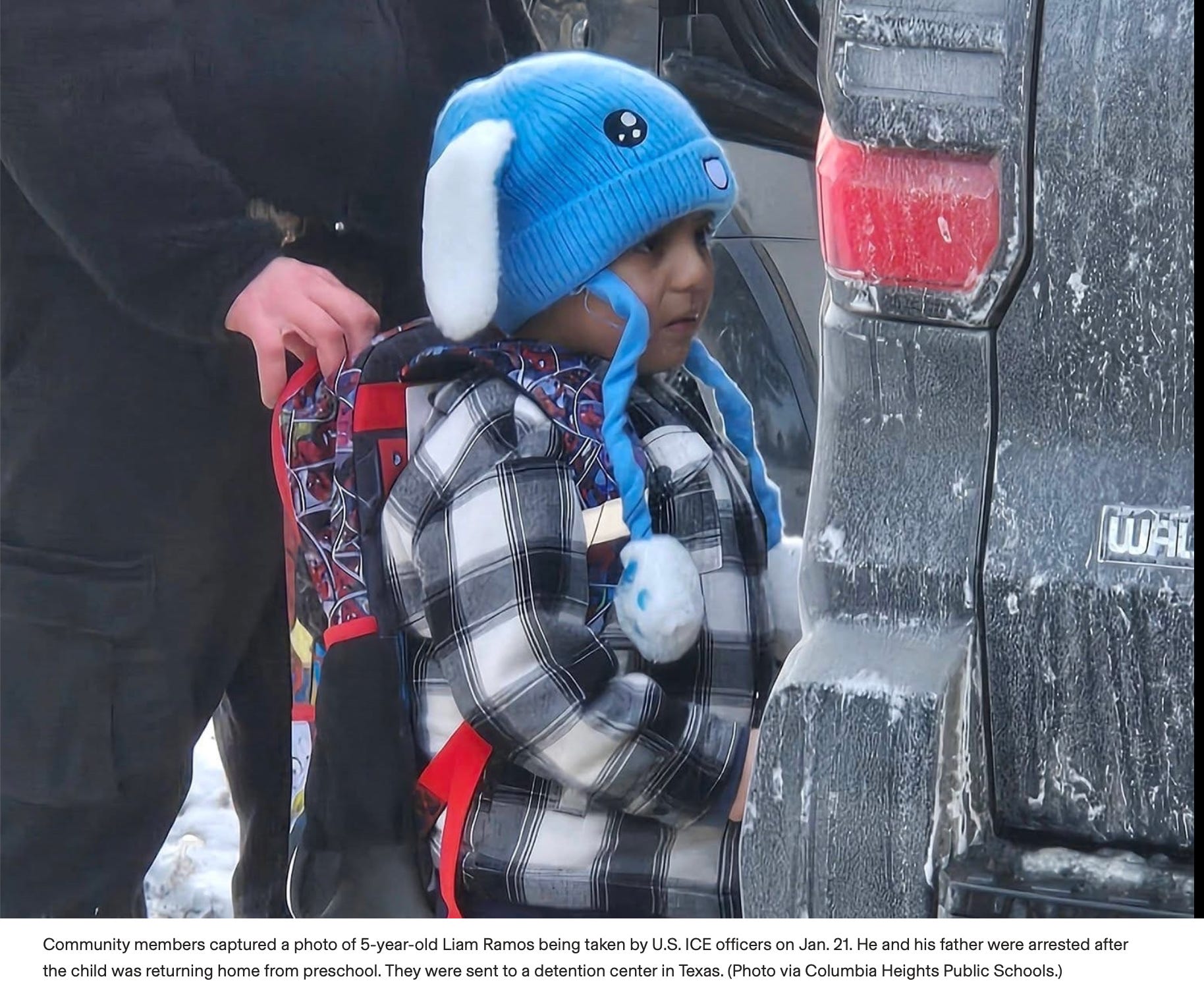
Liam Ramos, a preschooler, and his father were taken into custody while in their driveway. He is one of four children in the school district to be detained by ICE agents during ICE’s surge in the region. He and his father are in ICE detention in Texas. – The Guardian, ICE detains five-year-old Minnesota boy arriving home, say school officials
THE CONTRAST COULD NOT BE STARKER
In Minneapolis, courageous protesters peacefully protest, even as they engage in verbal confrontations in a “tense dance” with masked ICE agents. Encased in body armor and outfitted with the tools of violence, these agents continue to harass and arrest people, including citizens. They’re granted wide berth in their actions and immunity for the consequences by government leaders who command them from Washington, D.C..
Meanwhile, the monks walk on Southern roads, steadily in single file, on their way to D.C., inspiring people by the might of their silent presence speaking with the power of peaceful expression.
This is the language preached and prayed for in places of worship. Yet, those words, these sentiments, are seemingly forgotten or at least ignored, when the officers strap heavy armor to their bodies and don masks for work.
Let me leave you with this question: Can a nation founded in the brutality of our revolutionary war and expanded by our Western push infused with violence be brought back from the brink of authoritarian rule by the nonviolent engagement of its citizens?
Perhaps the monks’ Walk for Peace will inspire us to move in this direction, as the people of Minneapolis are showing us how to do. Today they are coming together in a “no work, no school, no shopping” protest against the ICE surge. In this “Day of Truth & Freedom” protest, these residents demand that ICE leave Minnesota, the ICE officer who killed Renee Good be held legally accountable, additional federal funding for ICE be ended, and the agency be investigated for human rights and constitutional violations.
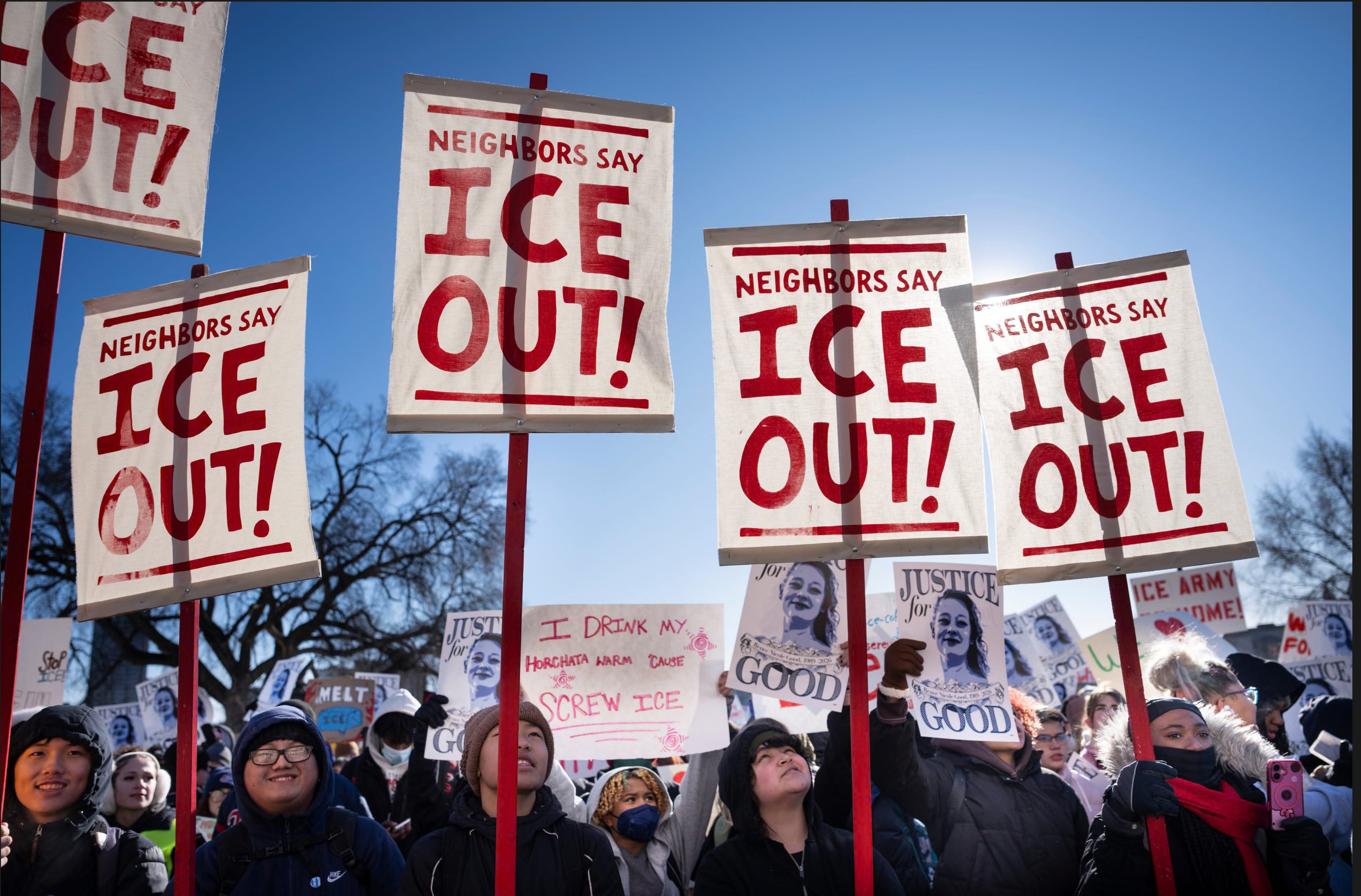
“Hundreds of local businesses in Minnesota have announced closures in solidarity. Thousands of people are expected to call out from work to join the action, while others will participate by not shopping on Friday. The Minneapolis city council endorsed the day of action and the general strike.” The Guardian, Jan. 23
In its original Sanskrit, it is a compound word formed of 'Satya', meaning 'truth' and 'Agraha', meaning “clinging, holding fast, adherence, insistence.” Gandhi believed that satyagraha assumes the form of civil disobedience in the political spectrum. Henry David Thoreau coined the word to signify his resistance to the unjust laws of a slave state.
Hey Melissa! If you are on IG check out @tarynsmithmovement. She is rowing across the Atlantic. Although nearly through with her row, her past posts are wonderful. Today’s post, #42, is great. So inspiring.
What a profound story! Thank you for writing this!