
Let's Row Together
In 2025, we need more courage, less conciliation, and no anticipatory obedience.

Courage.
We know it when we see it, but we’re not witnessing much of it these days.
Conciliation.
We know it when we see it, and unfortunately we’re watching much of it these days.
Intimidation. It’s in the air we breathe.
The question each of us must be ready to answer, when the time comes, as it will, is whether we will have the strength to respond with courage. Or we will settle for conciliation or practice “anticipatory obedience,” in the hope that we avoid having to make one decision or the other.
Courage Exemplified
Her first name, on its own, bespeaks courage.
Gisèle.
Say her name, and we are face-to-face with courage — the courage of an ordinary woman who demonstrated extraordinary courage by confronting in public view a cruelty done to her that is too grotesque to imagine and seen by most people as too shameful for any woman to use her name and show her face to fight against.
Gisèle said no to common wisdom, and by doing this she transformed women’s shame into a public display of shameful acts of men, which too long were protected due to the societal norm of shame that powerful men made women feel.
“Gisèle Pelicot’s courage in waiving her right to anonymity as a survivor of sexual abuse and successfully pushing for the hearings and shocking evidence — including videos — to be heard in open court have fueled conversations both on a national level in France and among families, couples and groups of friends about how to better protect women and the role that men can play in pursuing that goal.” The Associated Press, Dec. 19, 2024
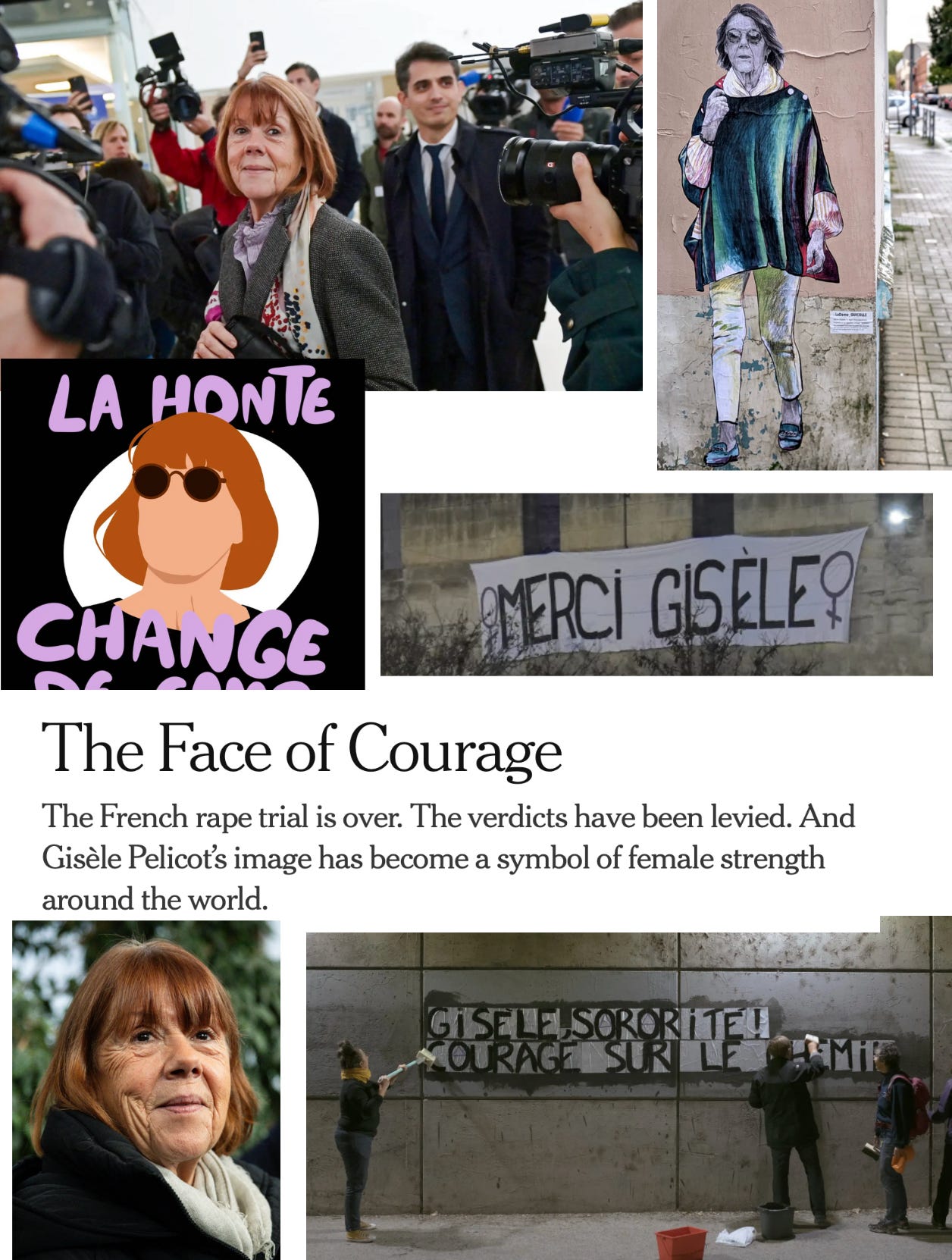
It was her right, by law, (written to respond to women’s shame of being raped), to keep such trials closed to the public.
“Instead, she opened it up to shed light on the problem of sexual violence and what is known here as ‘chemical submission’: men drugging women and sexually assaulting them without their knowledge. ‘This trial has been a difficult test,’ Gisèle Pelicot said outside the courtroom after the verdicts. ‘I am thinking of the unrecognized victims whose stories live in the shadows. I want you to know we share the same fight.’ Wall Street Journal, Dec. 19, 2024
Soon after our presidential election, I proposed that we use this time to strength ourselves in every way we can for what has been promised to happen after January 20th by the candidate who campaigned on a platform of retribution and revenge.
At that time I wrote: “Right now, we aren’t living in a moment of getting “past” what happened last night so much as we need to be finding ways to bulk up for the tough marathon of alarming experiences that are likely to newly sting us and remind us of how things fall apart. It’s vital we think of our work now as bracing ourselves for the long haul, and we do this by finding the tools we need to construct supportive buttressing for the months and years ahead.”
Here’s how I was wrong: America already needs acts of courage, yet even before the oath is taken, we are mired in public acts of conciliation in response to intimidation.

This is today’s headline on the Substack, “If you can keep it.”
And here is how “autocratic capture” is defined: “government using its power to coerce political loyalty from moneyed interests.” Think Russia, if you need a model.
In a grotesque display of the potent mix of wealth, power and influence, the Mar-a-Lago gang is shooting straight at businesses whose fortunes they can control with the policies and practices they threaten to put into effect. And this has corporate leaders genuflecting. Likely ahead of us is “anticipatory obedience,” such as what we see with the reactive demise of D.E.I., for example. As “If you can keep it,” reminds us, in a functioning democracy, businesses act either as a “bulwark against authoritarianism or its handmaiden.”
You decide which is happening now.
Athletes Teach Lessons in Courage
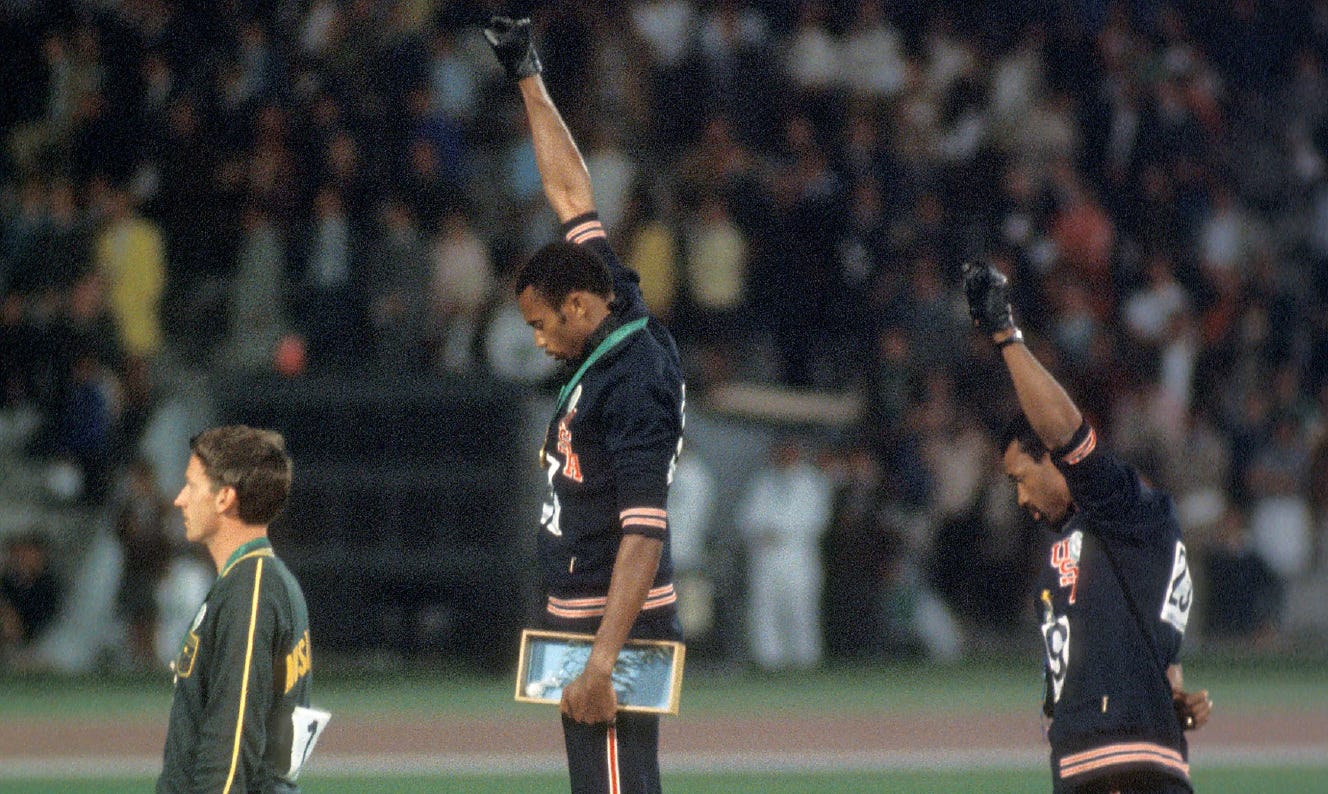
October 16, 1968, Tommie Smith (center) and John Carlos (right) at 200 meter medal ceremony.
Throughout my lifetime, I’ve witnessed courage by athletes.
Few moments are more memorable than when Tommie Smith and John Carlos raised their black-gloved fists as the U.S. national anthem played in the victor’s honor at the 1968 Olympics in Mexico City. At the height of their athletic careers, these men acted silently – wearing black socks and no shoes, one of them with a black scarf, the other a bead necklace to represent Black poverty. Their action spoke loudly to their nation’s racial inequities.
For doing this, they sacrificed promising athletic careers and experienced the stigma of disapproval pushed by powerful forces who controlled this narrative about them.1
When Kareem Abdul-Jabbar was a star college basketball player known as Lew Alcindor, he and other leading Black college athletes boycotted the 1968 Olympics as a protest against racial inequality.
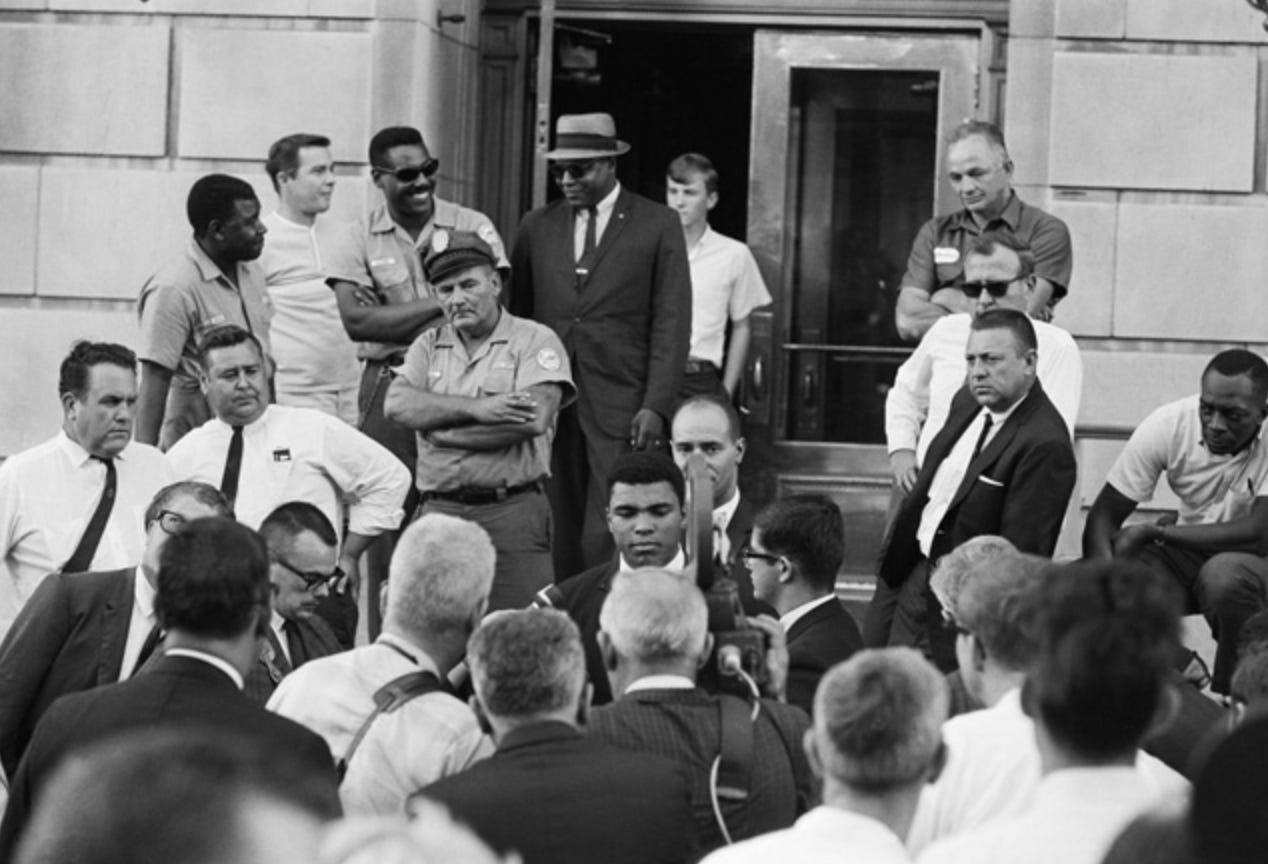
A year earlier, on April 28, 1967, Muhammad Ali, the World Heavyweight Champion, wearing a metallic blue silk suit, refused to step forward when a military officer in the induction office called his former name, Cassius Clay. Informed of the gravity of his failure to enlist, Ali continued to refuse. He previewed this moment a few months earlier when he said:
“My conscience won’t let me go shoot my brother, or some darker people, or some poor hungry people in the mud for big powerful America,” he had explained two years earlier. “And shoot them for what? They never called me nigger, they never lynched me, they didn’t put no dogs on me, they didn’t rob me of my nationality, rape and kill my mother and father. … Shoot them for what? How can I shoot them poor people? Just take me to jail.”
For doing this, Ali was arrested. Soon, he was convicted of draft evasion and sentenced to a jail term and fine, which were eventually was overturned on appeal. Ali also lost his boxing license and was stripped of his title. Until 1970, Ali was not allowed to box, but he spoke against the Vietnam War and racial injustice.
Other athletes have led with courage.
Colin Kaepernick: “I am not going to stand up to show pride in a flag for a country that oppresses black people and people of color,” this former NFL quarterback said on Aug. 26, 2016, after he knelt as the national anthem played. By protesting police brutality, he was exiled from the NFL, but his action led other athletes to join in this protest.
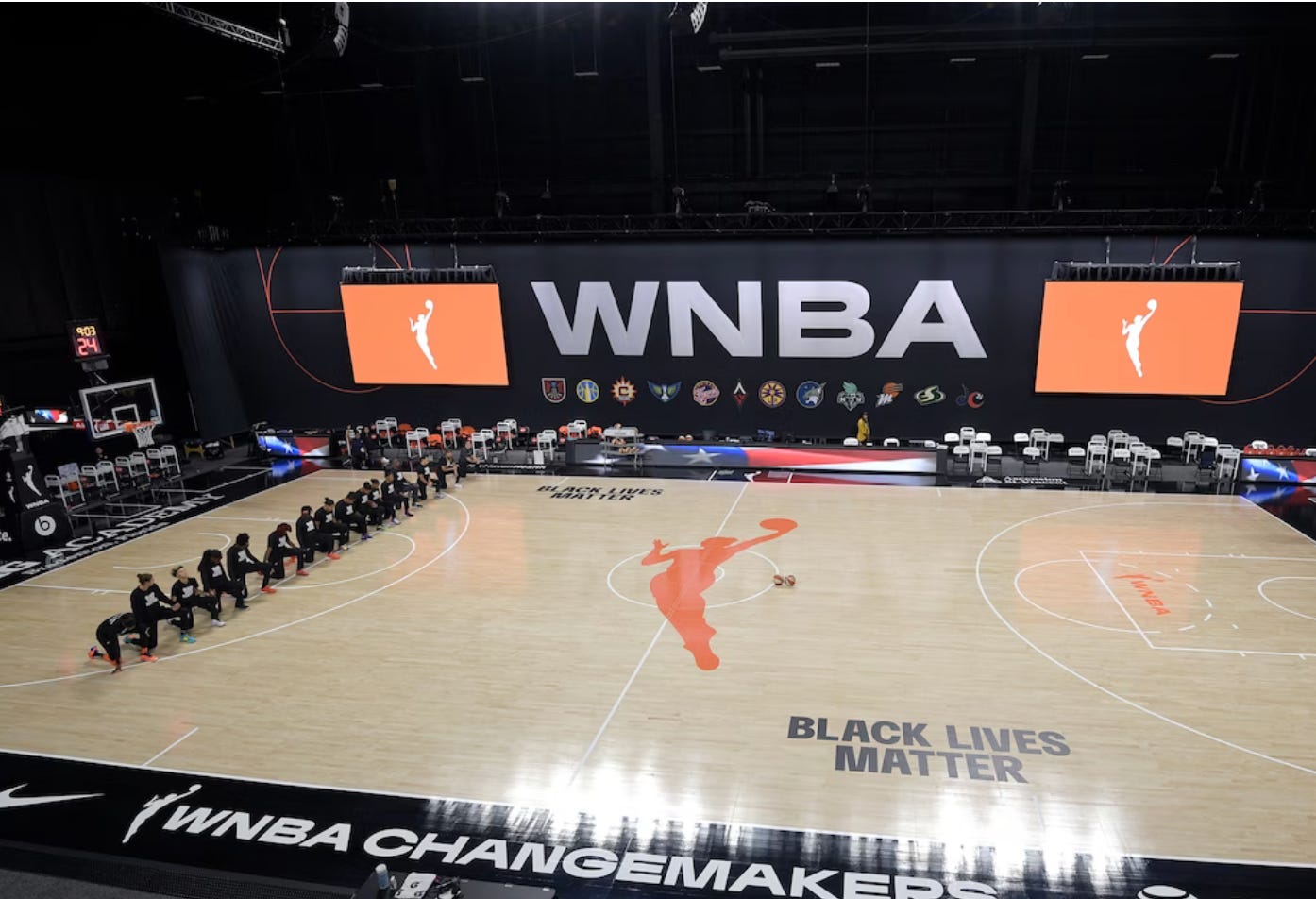
In 2020, Connecticut Sun players knelt as the national anthem was played before a game against the Indiana Fever.
No league matches the WNBA in players’ collective courage to act in drawing public attention to issues revolving around racial and gender injustice. They were among the first athletes to wear warm-up shirts with words supporting Black Lives Matter, take on a candidate for the U.S. Senate (who was also a WNBA team owner) and kneel during the national anthem.
Courageous Athletes - lest we forget:
Jackie Robinson, Bill Russell, Mahmoud Abdul-Rauf, the Syracuse 8, Billie Jean King, Jim Brown, Martina Navratilova, Jack Johnson.
Let us know of others we’ve failed to mention.
MAYA’S ARTWORK FEATURING WOMEN — AS NOTECARDS
I’m sharing my daughter’s first business venture featuring her paintings and sketches of women. Given my early notice of her venture, I might be her first customer since she paired my passion for beautiful notecards with my abiding interest in women’s lives. Her cards were an easy sell to me. Hope they are for you too.

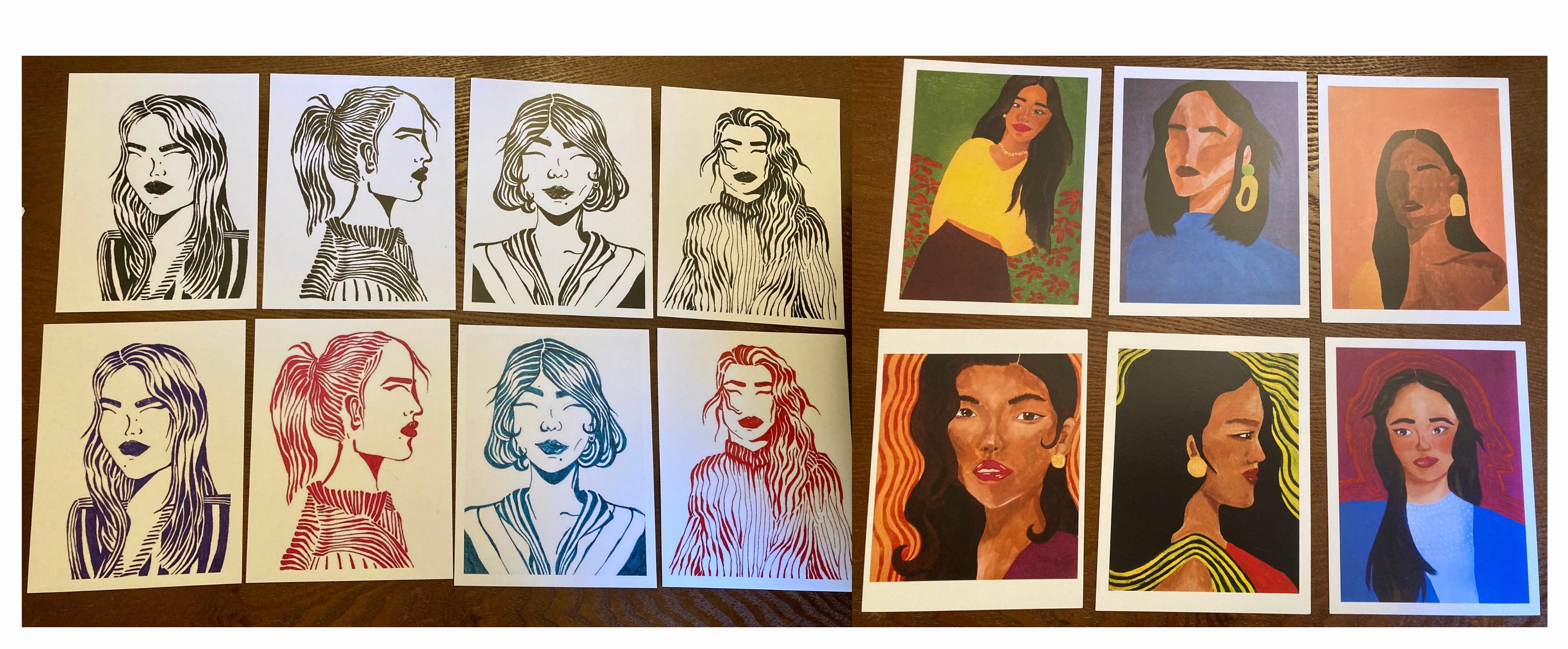
This is the link to order her cards, and her Instagram is @papayapaintingstudio
Now, a few words about my book.
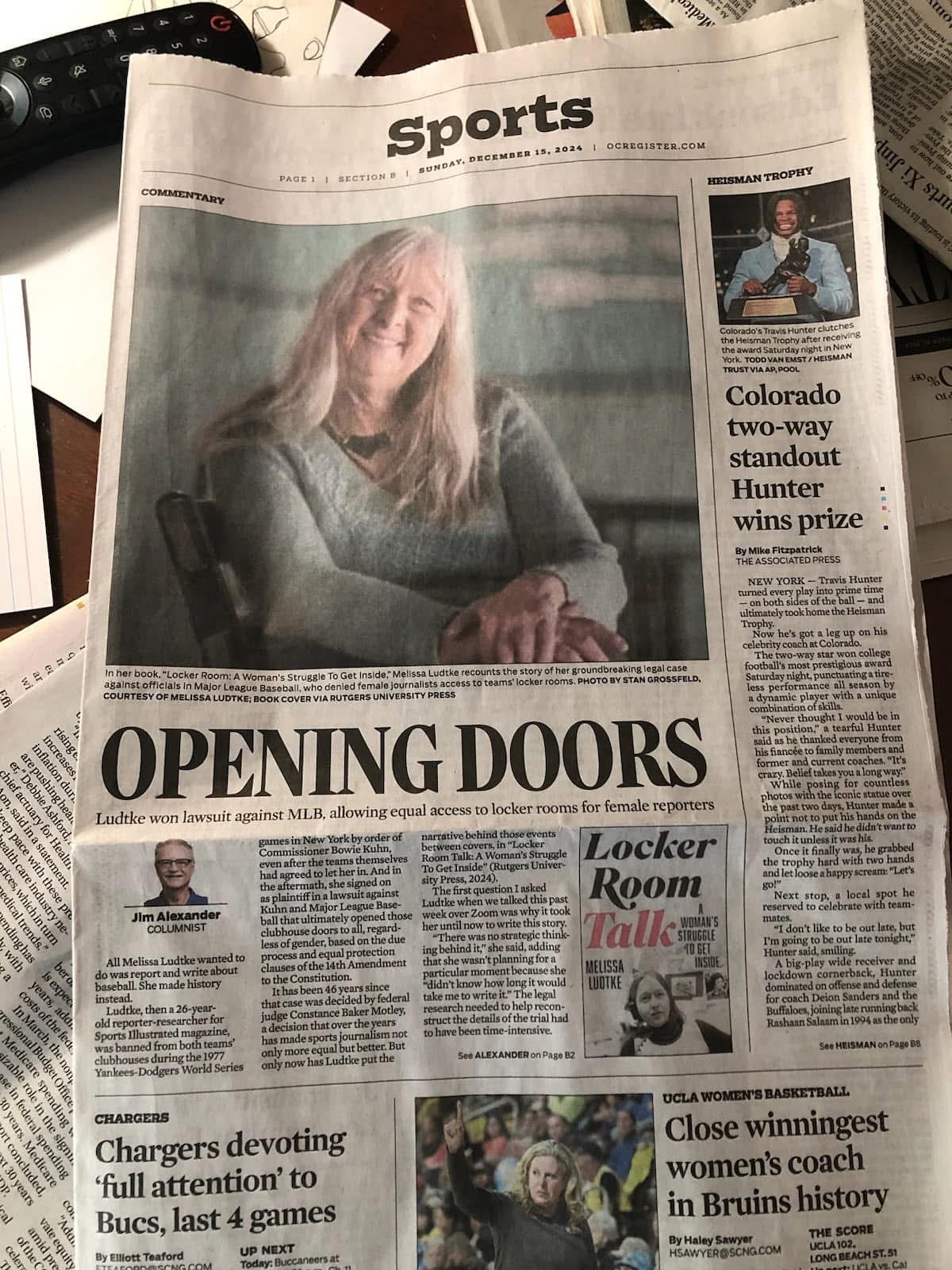
Jim Alexander’s sports column is published in Southern California News Group newspapers, a group of 11 that includes the Orange County Register and Los Angeles Daily News.
I wrote to Jim after reading his column, “Opening Doors.” I wrote:
"By far the best column written about my book and my case! Not one factual error - not even close - and you told the story well, both past and present. I appreciate the time you spent talking with me, as I see our conversation threaded throughout your column. I’ll be sharing your words far and wide." With gratitude, Melissa
For a bit of context, in the 1970s, when male sportswriters/columnists wrote about me and my case, few bothered to talk with me. Why do so when they knew their storyline? In their minds, I was immoral for seeking access equal to male writers who talked with ballplayers in their locker rooms; I was a "girl" [though I was 26] who was going into federal court to get a judge to permit me to leer at naked men; and Commissioner Bowie Kuhn was right to ban my entrance to protect the players’ “sexual privacy.”
Today, when writers talk with me, a lot of them get basic facts wrong in their stories, even after I encourage them to be back in touch with me if they have any questions or think they might need to check on something they’ve written.
When Jim Alexander nailed his account of my court case and why I wrote Locker Room Talk now, it was a great relief, so I wanted him to know. Here is what Jim wrote.
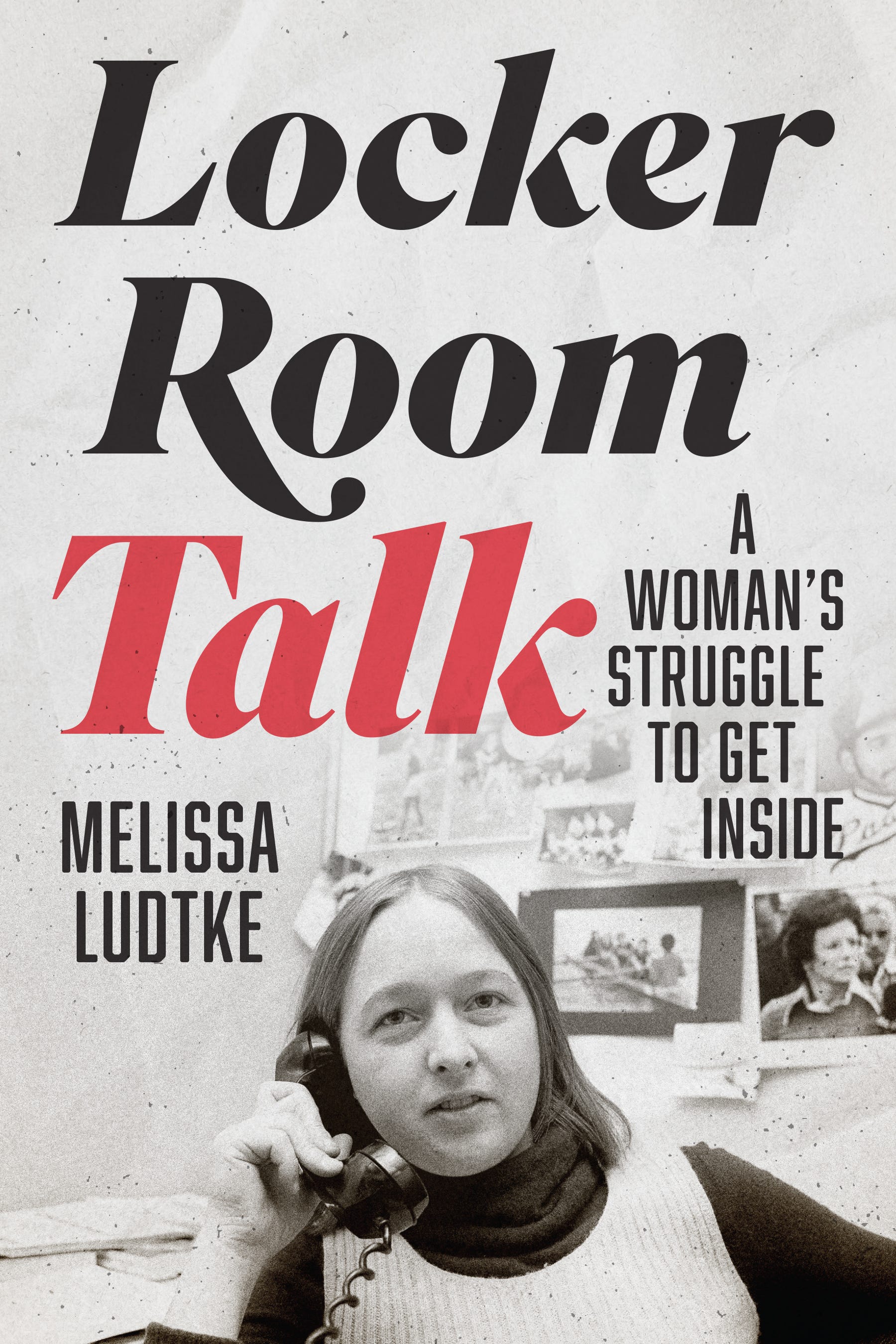
These days readers ask me to inscribe my book to their grandchildren, children, nieces and nephews, or their mothers, which I’ happy to do.
If you buy a book and want me to write an inscription, I’ll sign a bookplate and send it to you. Just email me at melissa.ludtke@gmail.com.
To purchase Locker Room Talk at a discount, go to my book’s page at Rutgers University Press and apply this code RUSA30 for a 30% discount + free shipping.
Are you a member of a book club? If your members decide to read Locker Room Talk, I’ll join you in discussing it. Via Zoom or in person, if you meet nearby. Just let me know of your interest and we’ll work it out.
To wear your own Locker Room Talk baseball cap - in white, black, blue or green - go to SHOP on melissaludtke.com to place your order there.

A fun, unique gift for a special someone in your life.
I can’t leave without thanking those of you who support my Substack with your paid subscription. What I write for Substack I publish for all to read, yet your voluntary financial support has made a huge difference in my life. It provides me with a cushion of income I am grateful to have while confirming that you value the time I devote to thinking about, researching and writing each of these essays.
It’s hard to believe that I’ve been doing this Substack for a more than a year — my first was published Dec. 6, 2023 – so some yearly paid subscribers are being asked to consider whether I’ve earned their renewed support, as monthly paid subscribers must decide every four weeks.
Let’s just say, I hope my annual subscribers are as loyal as my monthly ones are.
In 2008, Smith and Carlos were presented with the Arthur Ashe Courage Award, given to individuals whose contributions “transcend sports.”
Thank you!
Devoted subscriber.