
Let's Row Together
Can we go "home" again? Thomas Wolfe framed this age-old question in his novel's title. I ask it anew - and respond with insights ripened with age.

Every twist and turn of my hometown, Amherst, MA feels familiar.
Even though nearly six decades separate me from the time I lived there.
My parents moved us to Amherst when I was three months old.
Then, it was just me and them.
When I left Amherst I was 17, I had four younger siblings.
At that time, my destination was Rome, Italy for my last year of high school.
At first, when my parents told me we’d be leaving Amherst for my senior year, I’d screamed my displeasure.
At them.
How could they be so cruel as to take me away from friends I’d known for all of the years I’d been alive?
From my boyfriend with whom I’d been inseparable my entire junior year.
They were stealing from me everything I knew.
I yelled as loudly as I could, and when that didn’t work, I cried.
I tried everything I could think of to avoid leaving the only home I knew.
But nothing I said about their unfairness or meanness changed anything.
We’d sail on an ocean liner to Naples soon after school ended. Travel for a month and a half in Europe, and then I’d go to Rome.
My parents knew I’d survive, even if I didn’t see how I would.
My dad was taking a sabbatical, and that’s why we were leaving. As a tenured professor at UMass Amherst, he was owed one every seven years.
On his first one, I was 11 years old, in 5th grade, and too young to protest. Back then, we only drove an hour East on the Mass Pike to resettle in Newton, a Boston suburb, while my dad studied at MIT.
But for his second one, our family would split up. The three younger kids would live in Oxford, England with my parents, and I and my sister, who was a year younger, would be boarding students at St. Stephens, an American high school in Rome.
We’d chosen this school when my parents gave us the option of picking one in Europe to attend. It was the only one I’d heard since my cousin and a neighbor friend from Amherst had gone there.
Of course, my parents were right — my year in Rome was the single best year of my life until 27 years later when I went to China and brought Maya home to Cambridge.
Only becoming Maya’s mom could top what I’d experienced by living in Rome, and the lifelong friends I gained.
When I returned to the States, I was in college.
And never again would I live with my family in our Amherst home.1 Except for holidays, when I stayed long enough to see the doctor and dentist that my mom kept making appointments for me to see during college breaks.
Then, I’d be gone, again.
After that, exhilarating years of work I loved in cities I enjoyed living in put Amherst in my rear-view mirror.
Only in aging have I gained a clearer sense of how much of Amherst lives inside me.
Of how this town will always be what I call home. In every sense of what the word “home” means.
As the place where I feel a sense of belonging. A comfort zone, where memories of my mom and dad and brother, each of whom I’ve lost, as well as friends gone too, are alive in me.
It’s where I dug my roots.
Just as in my childhood, sturdy maple trees had dug their roots in our front yard.
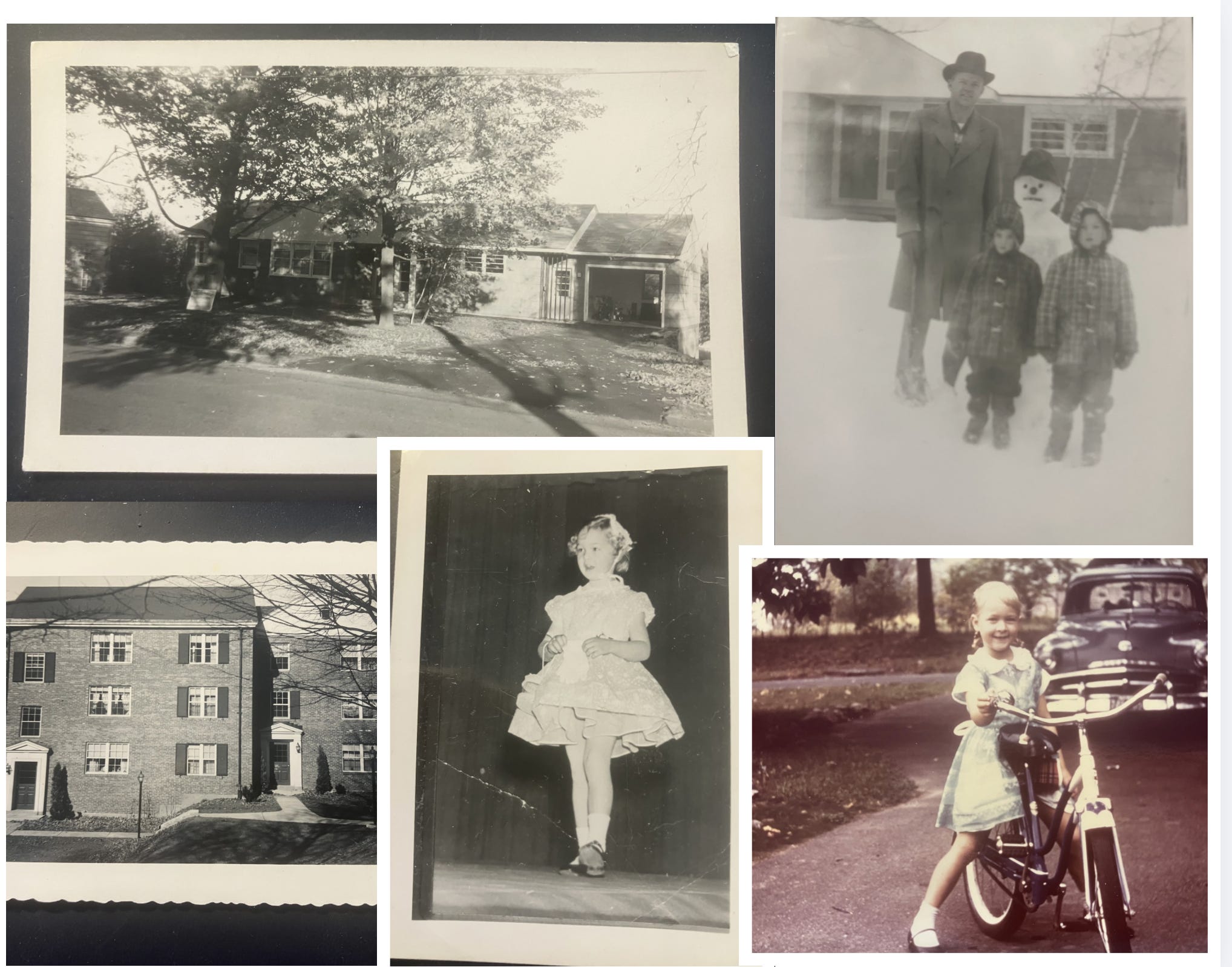
Thomas Wolfe wrote that I can’t go home again …
"You can't go back home to your family, back home to your childhood...back home to a young man's dreams of glory and of fame...back home to places in the country, back home to the old forms and systems of things which once seemed everlasting but which are changing all the time – back home to the escapes of Time and Memory." - Thomas Wolfe, You Can’t Go Home Again, a novel posthumously published in 1940
But I do.
I return to Amherst infrequently alas, and when I’m back, I don’t stay long.
Still, my brief returns morph into inner journeys that stick around.
Journeys that are kick-started by memories that surface when I’m back there.
Kept alive by the feelings they evoke.
All of which surfaces (if a bit scrabbled) in dreams I have days or months later.
All of which ought to give you a clue that my years of growing up in Amherst were joyful.
And enviable.
Yes, enviable, as I see my childhood in stark contrast to what growing-up in America is like today.
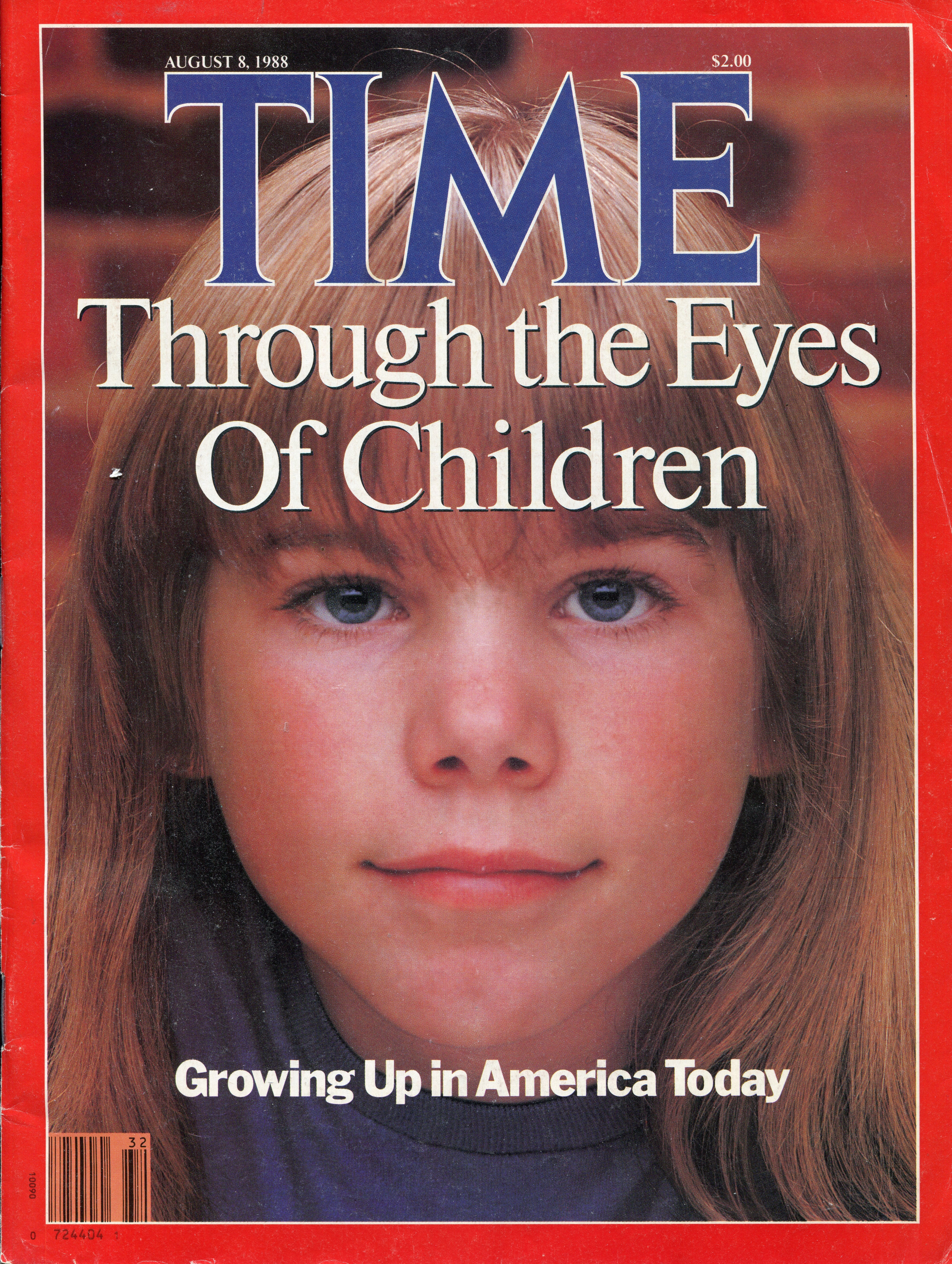
I could not have imagined a cell phone when I was growing up. Or connecting by social media to people I’d call friends but might never know.
For me, companionship was being with friends. And teammates.
I don’t remember feeling lonely. Maybe at times I was, but it was never a prevailing feeling.
If I felt that way, I had places to go to hang out with friends. And a bike to get me there.
Heck, neighborhoods then overflowed with kids since big families were a hallmark of the 1950s.
In the summer, we had the community pool and nearby craft tables with counselors to help make bracelets out of threads and necklace pendants from shells and stones.
In the winter, sliding hills and outdoor skating rinks and ponds were gathering zones.
Back then, we were freer to roam since parents’ fears for our safety didn’t constrict us as they do kids today.
I joined other kids at the Unitarian Church in organizing in-person protests — our way of responding to nightly TV stories about civil rights struggles in the South.
Back then, we all watched the same news.
Clicking thumbs-up wasn’t an option, so we showed up in person to plan, to act, and then to celebrate.
Strong, enduring friendships flourished in the absence of emojis.
All of which led to that closeness of my friendships that I didn’t want to leave in my senior year of high school.
Even the inevitable break-ups in our dating relationships we did in person.
As tough as that was to do.
All of which strengthened us for the emotional experiences we’d confront as grown-ups in our personal and work lives.
My childhood was not embedded in the “artificial intimacy” that MIT’s Sherry Turkle writes about in her new book of that name in which she speaks about the increasing reliance on AI chatbots — even in daily interactions — which “is slowly changing the way we form attachments and handle our emotions.”
Returning to Amherst - Briefly, Recently
I was back in Amherst two weeks ago after I’d picked up my friend, Jocelyn, at Logan Airport that morning after she’d flown from China. By early evening, I was dropping her off in Amherst, where she’d also grown up.2
“Should I take Strong Street?” I asked her, as we drove to the Amherst’s center for an evening band concert.
“No, let’s stay straight,” she replied.
I did, and as we passed the sign saying Strong Street, I felt a tug of pride for recalling its name.
Maybe it helps that this end of Strong Street was the site of my first car accident not long after I’d gotten my driver’s license when I was 16.
It happened late on a winter afternoon. I’d pushed hard on the brake but all I felt was the car turning on its own to slide sideways on ice. Within seconds, I’d slid past the stop sign and into the other road, finally stopping when bumping against another car.
People who lived in the nearby farm house and had heard the crash invited me inside to call my parents. I was shaken up and I couldn’t stop crying when my dad answered my call.
Fortunately, the crash wasn’t all that bad since the other car, after seeing me, swerved to avoide a worse collison.
Still, that’s not a phone call you forget — even 60 years later.
So, when Jocelyn and I drove by Strong Street on this recent June afternoon, those terrifying few moments popped up in my mind.
Five minutes later, when I dropped Jocelyn at the grass park across from what had been my junior high school in the 1960s, I lingered long enough to let some memories slip in.
There are apartments there today. Made of brick, like my school was, but in every other way they look very different. Yet, as I stared at the apartment complex, I was seeing my junior high school as one memory quickly yielded to another …
Initially, I saw myself at my first school dance with Bobby Vinton’s Blue Velvet playing in a darkened, decorated school gym. I’m slow dancing with Billy Crossman who’d asked me to go to this dance with him. [At our 50th high school reunion, he and I reenacted this dance to Vinton’s song.]
Then, that picture in my mind flipped over, and I was back at those evening dance classes held in this same gym. Billy and I were there with dozens of fellow students — girls seated on pulled-out bleachers on one side of the gym, boys on the other. Then, after the insstructor showed us the dance steps, the boys came to us asking us to pair with them to practice the dance.
Flip the memory card again and I’m a cheerleader for the boys’ basketball team at after-school games in this same gym.
Drawing me next to a fiercer memory of how nobody showed up to cheer for the games we played! In fact, few spectators came to see us play.
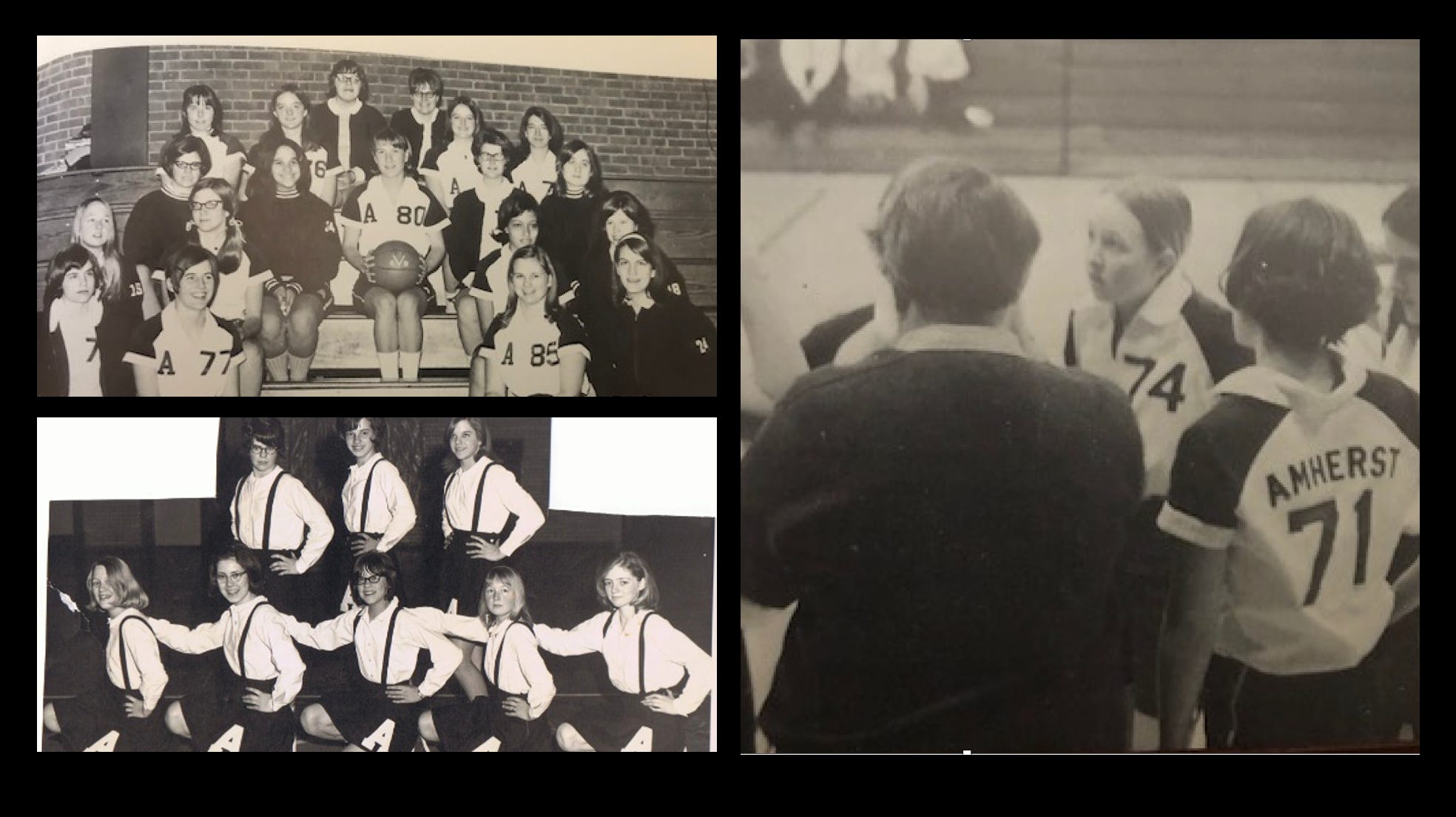
In those days, what one would call patriotic moments of celebration were occasions for teachers to lead their students to the second-floor auditorium, like they did on days when men were being launched into space. We watched on a black & white TV that we could barely see. Didn’t matter. We knew when they went into space and we cheered together.
Then came that November day when my homeroom teacher told us President Kennedy was shot and he was dead. I cried when my mom drove me home.
These moments — along with so many others — are etched in my memory, only to resurface when I go home.
These are what makes Amherst home to me.
In all the times I’ve been back, I think I’ve made only one bad mistake.
Perhaps it happened because I was trying too hard to be back in a time that can never be again.
Not content with memories alone, I knocked on the door of what was our home. And I told its occupants I’d once lived there and asked if I could come in to look around.
Don’t do that.
That day I learned a valuable lesson: it’s best to hold in your mind images of the place you call home.
See it in your mind’s eye filled with all that made it feel that way.
Like I still see my mom’s typewriter on its rubber pad on top of the metal table that she rolled up to the window on the side wall of our living room. Close to the kitchen so while she was preparing meals she could dash over and type a short note while food cooked.
I still hear the hard tap, tap, tap of her fast fingers typing letters to her friends.
When it was my turn to receive her typed letters — first in Rome, when she filled every available dot of space on the blue air mail stationary, then at college, when her typed words stood out on her white stationary with her name on top— I saw her typing them as I read what she wrote.
I hear the tapping of her fingers on the typewriter keys whenever I’m back in Amherst.
Our family home is still there, even if so much about it has changed.
Having seen it a few times, I now make a point of not driving by anymore since it saddens me when I do.
Not seeing those glorious maple trees in the front yard is tough for me. Nor the birch trees closer to the house. Gone, too.
As are the fields across the street where I played ball with neighborhood kids.
Paved over as parking for university students.
And that nearby apple orchard, cut down, too, to build the Orchard Hill dorms.
When I walk through the university, my mind glides back to fun days when our family skated on the campus pond.
I also can feel again the prickly tongues of cows licking my outstretched hand, making me giggle. We’d visit the cows when my parents biked me to the animal barns that long ago were in the middle of the campus.
At bedtime, my dad would weave fanciful tales in which the main character was the man with the long, scraggly beard who took care of the horses at the barn we visited with our hands clutching carrots to feed them.
Those animal barns are gone, and in their place is the Mullins Center, the sports arena where I watched my niece, Allison, graduate from UMass Amherst about a dozen years ago.
For me, the remaining touchstone at the university is Draper Hall where my dad had his first office and where my mom would take me on afternoon visits. His second-floor office was next to the white-rimmed porch over the entry doors on the right side of the building, pictured below.
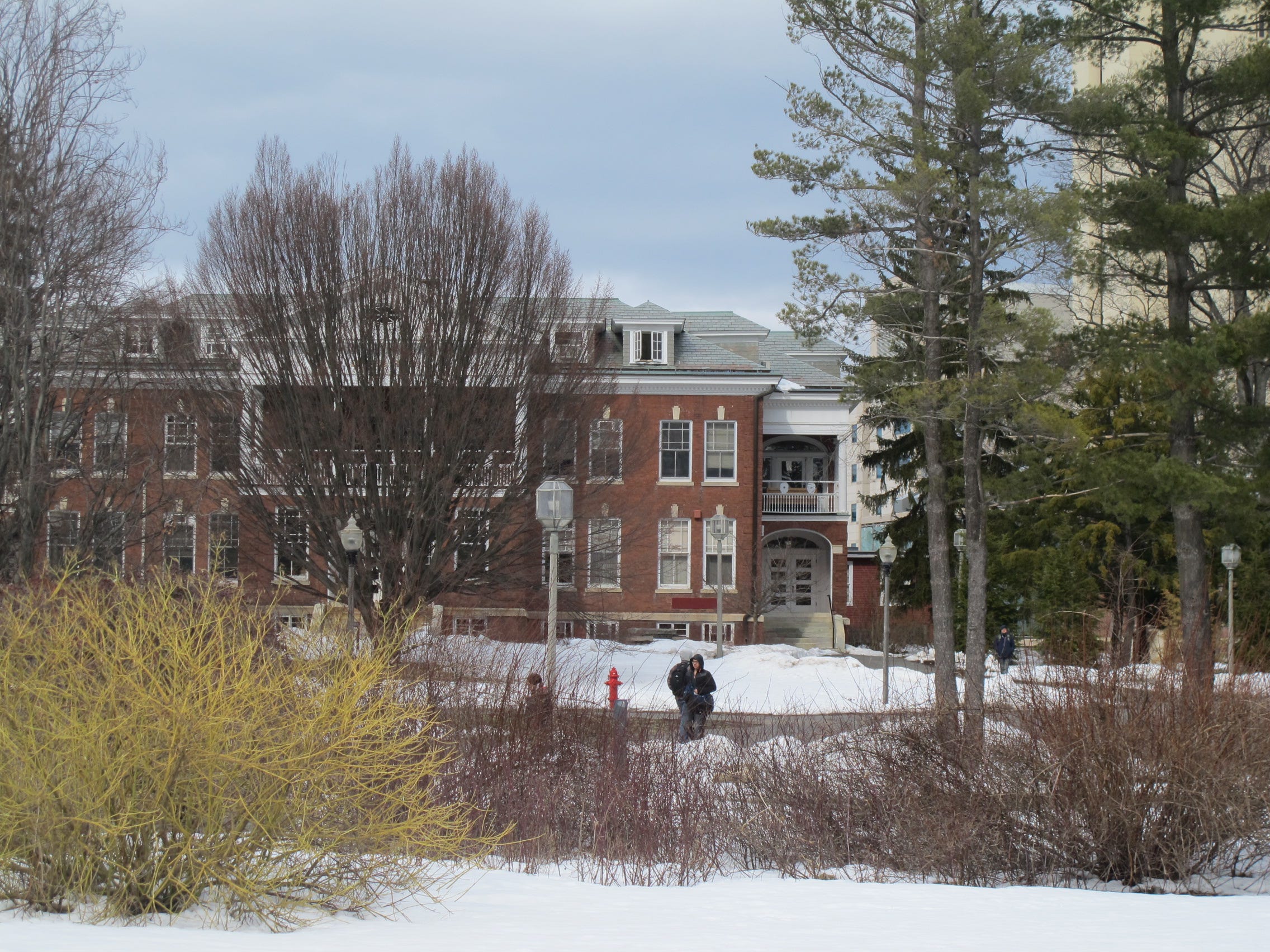
Occasionally, I still walk up the stairs I walked up as a child when I’m at the campus.
Each time I retrace my steps, I can’t help but remember asking my mom what the word “bastard” meant after I heard a student coming down the stairs use that word alongside my dad’s name, as “that bastard, Professor Ludtke.” Apparently he’d left my dad’s office in a sour mood — perhaps with a lower grade than he’d expected.
My dad was a tough grader. I know because starting when I was quite young I’d sit on the arm of the chair where he sat grading blue book exams at home. Though he taught finance, he valued the English langugage. So, he circled misspelled words as well as those where necessary punctuation was absent. Those red circles and his numerous margin notes counted - likely not in a good way - when it came time to put his grade on the exam.
Being with my dad in that way taught me a lot as I saw him teaching others.
Another reason I’ll always think of Amherst as home.
She liked nothing more than flying
Wally Funk, who died this week, reminds me of my sister, Betty.
From an early age, each of them wanted to fly. Both did, despite barriers each one overcame.
As far as I know, Betty never ached to be an astronaut the way Wally did.
Being an international pilot for American Airlines was enough for her.
Wally flew planes, too, but at a time when being an American female eliminated the possibility of becoming an astronaut.
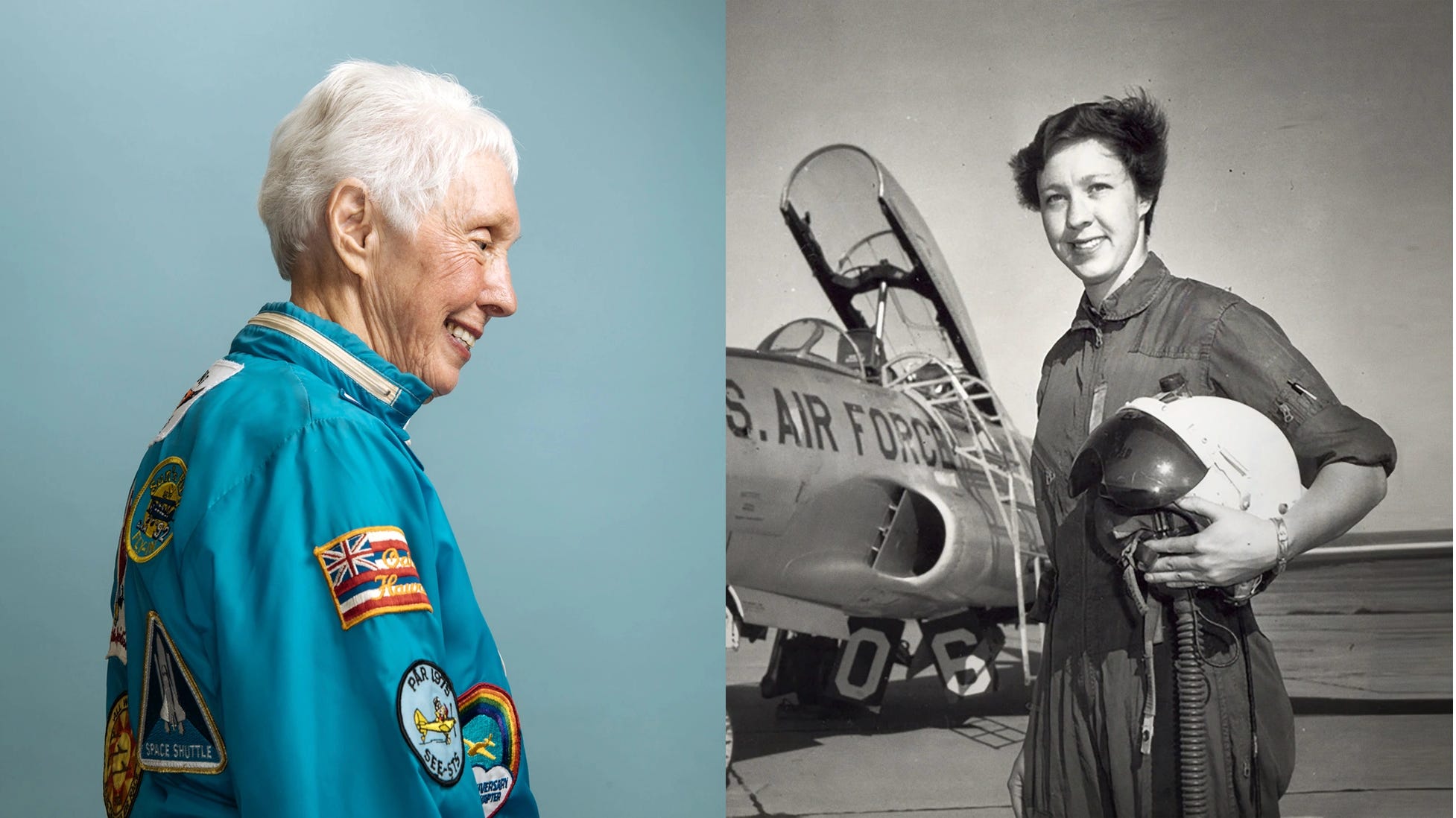
Funk’s capacities to be an astronaut were tested in the“Mercury 13” program in February 1961. This privately funded program trained women pilots in NASA’s early years. Funk and the other women chosen for this program did the same training and testing required of the seven men who NASA selected as astronauts in the Mercury spaceflight program.
At 22, Funk was the youngest woman graduate of the program and told she had “done better and completed the work faster than any of the guys.”
For example, compare her test inside of a sensory deprivation tank to the the one that John Glenn did:
For his test, John Glenn sat at a desk in a dark, soundproofed room. He found some paper in the darkness, pulled a pencil out of his pocket, and spent the test writing some poems in silence. He walked out three hours later.
For her test, Wally Funk floated inside a tank of water in a dark, soundproofed room. She couldn’t see, hear, or feel anything. She emerged 10 hours and 35 minutes later, not because she was done, but because the doctor administering the test decided it might be time to pull her out. [The Atlantic, “Guess Who’s Going to Space With Jeff Bezos?: Wally Funk has been ready to become an astronaut for six decades.” July 2021]
Despite the women’s impressive results, NASA denied them the opportunity to become astronauts.
“I got ahold of NASA four times, and said ‘I want to become an astronaut,’ but nobody would take me,” Funk said. “I didn’t think I would ever get to go up. Nothing has ever gotten in my way. They say, ‘Wally, you’re a girl, you can’t do that.’ I said, ‘Guess what, doesn’t matter what you are, you can still do it if you want to do it,’ and I like to do things that nobody’s ever done before.”
NASA selected its first class of female astronauts in January 1978.
Funk became the oldest woman to travel to space on a short flight on Blue Origin. She was 82 years old. [ CNN, “Aviation pioneer Wally Funk, who trained as an early female astronaut, dies at 87,” July 9]
Celebrate a Joyful Anniversary
On July 9, 1868, the Fourteenth Amendment of the US Constitution was ratified. It granted citizenship and “equal protection under the laws” to anyone who is “born or naturalized in the United States.”
Hold tightly to this amendment. It’s needed today perhaps more than at any time in our nation’s history except when it was ratified to give equal rights to those who had been enslaved.
It’s the Constitutional amendment Judge Constance Baker Motley cited as the basis for her order that told Major League Baseball to provide EQUAL ACCESS to all reporters/writers. Until then, women writers had been kept outside of locker rooms where the ballplayer, manager and coaches interviews with male reporters/writers took place.

I lived in our Amherst home for two college summers, when I took summer school classes at UMass Amherst, then was at Smith College during another summer. Living there then, Amherst didn’t feel like home but as if I was a visitor living in a dorm, with my family on Cape Cod.
With a 10-year age difference, I didn’t know Jocelyn in my childhood, but after a mutual friend in China introduced us via email and Jocelyn and I first Skyped, I discovered that she’d competed on the Amherst High School gymnastics team with two of my younger siblings.
Thank you for sharing your memories.
Melissa, what a deep and heart-felt essay and beautifully told! I will see our visit to Amherst -- when you drove us there --in a new way now!